
A cat tunnel is the cheapest enrichment purchase that actually gets used. Cats are ambush predators by instinct, and a collapsible tube triggers the whole sequence — stalk, hide, burst out — in a living room with no prey involved.
It is also one of the few cat products where the cheap version works as well as the expensive one, provided you buy the right diameter.
Tunnels satisfy two instincts at once. Enclosed spaces read as safe cover, which is why cats claim boxes and bags uninvited. And a tube with an exit at each end is a natural ambush position — the cat waits inside, watches, and launches. That predatory sequence is what most indoor cats never get to complete.
Diameter matters more than length. A tunnel narrower than about 10 inches forces the cat to squeeze, and squeezing kills the ambush instinct that makes the toy work. For an average adult cat, 10 to 12 inches internal diameter is right; large breeds and Maine Coons need 13 inches or more.
Crinkle material mimics the sound of movement in undergrowth and drives most cats into immediate hunting mode. It is also loud, repeatedly, often at three in the morning. Quiet plush tunnels get less frantic use but cause fewer household arguments. If your cat is already high-energy at night, buy quiet.
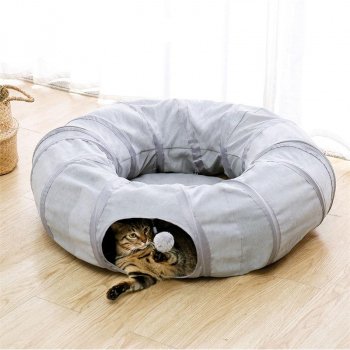
They help. A side opening lets the cat break line of sight and gives a second ambush exit, which extends play from a straight run-through into an actual game. Multi-cat homes get more from peek holes than single-cat homes, because the hole becomes a paw-swipe point between two cats.
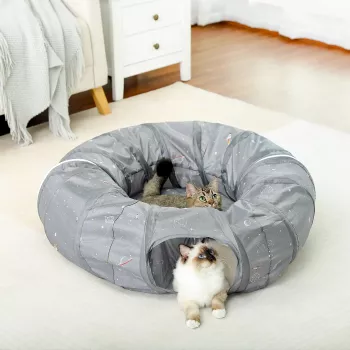
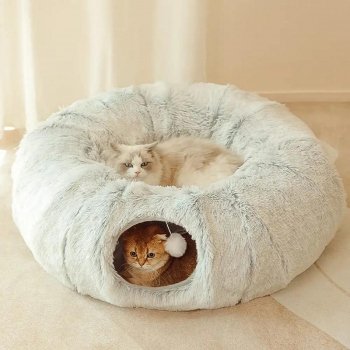
Better than they sound. A tunnel that opens into a cushioned nest gives the cat a hiding place it will sleep in as well as play in, which roughly doubles the hours the product earns its floor space. For small apartments where a separate bed and a separate tunnel is one item too many, the hybrid is the practical choice.
Put it where the cat already patrols, then leave it alone. Do not push the cat through it. Drag a wand toy past one opening and let the cat chase it in on its own terms. Most cats investigate within a day once the object stops being new and starts being furniture.
Yes for storage, and yes for travel or vet visits where a familiar hiding place reduces stress. The spring frame is also the part most likely to fail, so check that the fabric is stitched rather than glued at the hoops — that seam is where cheap tunnels split first.

From the pet toys and mats and houses ranges:
Browse all pet supplies, or read the cat tree buying guide if your cat needs height as well as cover.

Generally yes, provided there are no loose dangling strings or detachable pom-poms. Hanging toys on elastic are the common hazard — a cat can get a claw or tooth caught. Cut those off if you plan to leave the tunnel down permanently, which you should, since constant availability is what drives use.
Vacuum the interior with a hose attachment and spot-clean with diluted enzyme cleaner. Most crinkle tunnels are not machine washable — the internal foil layer degrades. Plush tunnel beds with removable cushions are the easier option if hygiene matters to you.
No. Tunnels address boredom and the hunting instinct; scratching is a separate need tied to claw maintenance and scent marking. You need a post for that — see the cat scratching post guide.
For guidance on enrichment and play needs for indoor cats, International Cat Care is a reliable non-commercial source.

If you have any questions, here are some useful links:



Leave a comment