
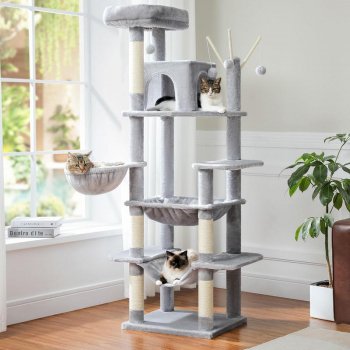
A cat tree is a freestanding structure combining scratching posts, elevated platforms, and enclosed spaces into one piece of furniture. Cats need vertical territory — height is how they feel safe, survey a room, and escape other pets or children. Indoor cats without vertical access redirect that instinct onto bookshelves, counters, and curtains. A cat tree is the sanctioned version of behavior your cat will perform regardless.
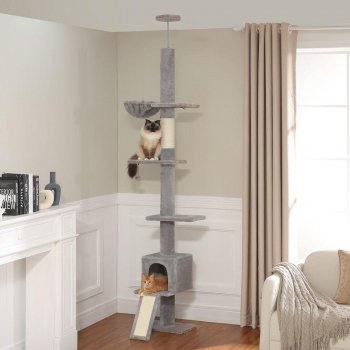
Minimum useful height is about 28 inches, which allows a full stretch while scratching. Most cats prefer perches between 4 and 6 feet, high enough to see over furniture. Floor-to-ceiling models suit small apartments because they add vertical territory without consuming floor space. Anything under 28 inches tends to get ignored entirely once the novelty fades.
The terms overlap heavily in retail listings. A cat tree generally implies multiple levels and branching platforms. A cat tower emphasizes vertical height on a narrow footprint. A cat condo refers to enclosed cube spaces for hiding and sleeping. Most modern units combine all three, so match features to your cat rather than shopping by label. Our cat tower guide covers the vertical designs in detail.
Maine Coons, Ragdolls, and Bengals need reinforced construction, platforms at least 16 inches wide, and a base heavy enough to resist a running jump. Standard trees rated for average cats wobble under a 15-pound body landing at speed, and a wobbling tree gets abandoned permanently after one bad experience. Look for thickened board and a wide, weighted base.
Tension-mounted floor-to-ceiling designs brace between floor and ceiling, using roughly one square foot of floor while delivering the most vertical territory available. They suit renters because no wall drilling is required. Ceiling height must be measured before ordering — most adjustable models cover a fixed range and will not tension correctly outside it.
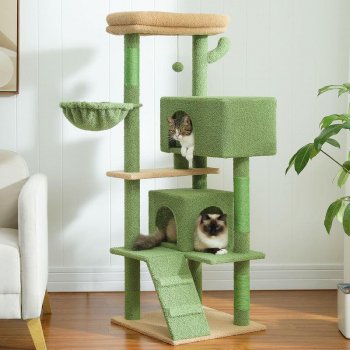
Carpet-wrapped beige towers are no longer the only option. Modern cat trees use natural wood, felt, and neutral fabric in shapes designed to read as furniture rather than pet equipment. Sisal remains the functional scratching surface regardless of aesthetic, because it withstands shredding far longer than carpet and satisfies the claw-maintenance instinct properly.
Sisal rope outlasts carpet by years and sheds far less debris. Carpet frays into loose loops that can catch claws, and shredded fibers spread across the floor. Cats also scratch sisal more readily because the vertical grain gives resistance. If a tree offers only carpeted posts, expect replacement within a year in an active household. See our cat scratching post guide for surface comparisons.
Placement determines whether the tree gets used. Position it near a window with a view, in a room the family occupies, away from the litter box and food. Cats want to observe activity from a safe height — a tree in a spare bedroom nobody enters will be ignored no matter how well built it is.

Browse the full cat scratchers and cat furniture range, or all pet supplies:
Related: beds and furniture for cat beds and cave beds.

Cats need vertical territory, and a cat tree is the most practical way to provide it indoors. Climbing and perching are core feline behaviours tied to safety and territory, not luxuries. A cat without approved vertical space uses shelves, wardrobes, and counters instead. The Cornell Feline Health Center covers indoor enrichment needs in more depth.
Beside a window in a room the household actually uses. Cats want to watch activity from a safe height, so a tree in an unused spare room gets ignored regardless of quality. Keep it away from the litter box and food bowls, and near an existing nap spot so the cat finds it naturally.
At least 28 inches so the cat can stretch fully while scratching, with four to six feet preferred for perching. Levels should sit 12 to 14 inches apart. Wider gaps force jumps that heavier and older cats refuse, which leaves the upper platforms unused.
Place it where the cat already rests, rub catnip on the scratching posts, and reward any contact in the first week. Never lift the cat onto it — forced placement creates avoidance. If the tree wobbles at all, fix the stability before anything else, because a cat that slips once rarely returns.
Three to seven years for a sisal-wrapped tree with solid board, and under a year for carpeted posts in an active household. Sisal is replaceable — rewrapping a worn post costs a fraction of a new tree and is the single cheapest way to extend its life.
Compared against reupholstering a sofa, yes. A mid-range tree costs less than one furniture repair and redirects the behaviour permanently rather than suppressing it. The waste comes from buying too small or too unstable, not from buying at all.

If you have any questions, here are some useful links:



Leave a comment