
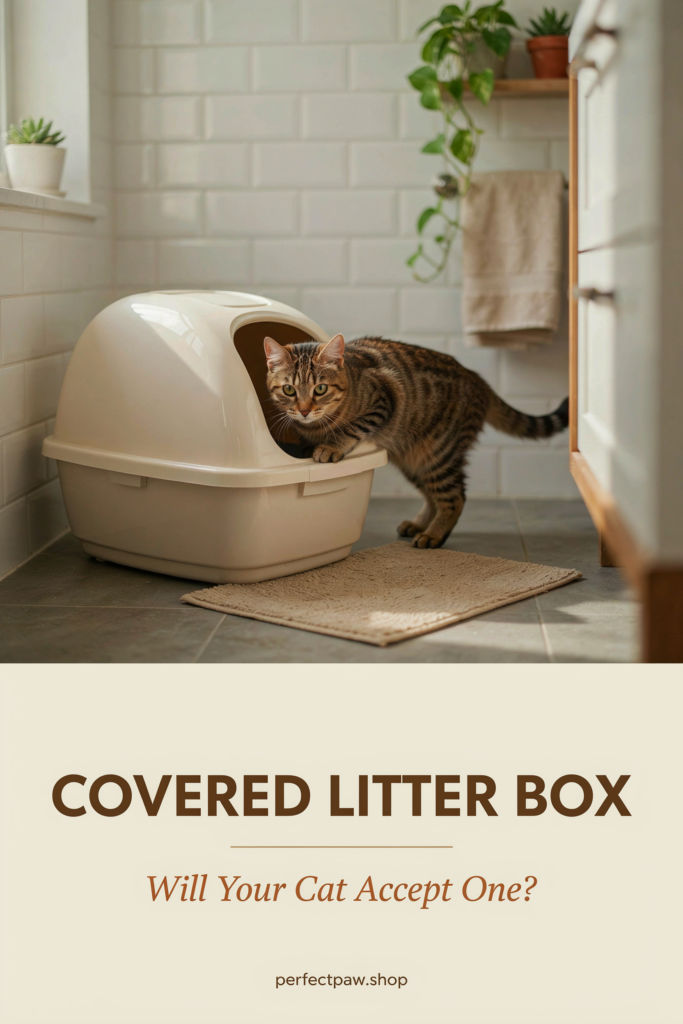
A covered litter box solves a human problem — smell, scatter and the sight of a tray in the hallway — and creates a feline one if the wrong cat gets the wrong box. Cats and owners judge these boxes by opposite criteria, and knowing where those criteria collide is the difference between a tidy corner and a cat using the bath mat.
Most do not, given a free choice. Cornell’s Feline Health Center is direct about it: covers hold odours in, and an uncovered box lets a cat keep a full 360-degree view while it is vulnerable. That does not mean covered boxes fail — it means they have to be bigger, cleaner and better placed than an open tray to work.
Single-cat homes, confident cats, enthusiastic diggers who spray litter up the walls, households with a dog that raids the tray, and any box that has to sit in a living space. Semi-enclosed designs — a high back and sides with an open front — capture most of the scatter benefit while keeping the sightlines that make cats comfortable.
Nervous cats, cats in multi-cat households where one gets ambushed leaving the box, large breeds that cannot turn around inside, and seniors with stiff joints that struggle with a step-over entry. If a cat starts eliminating next to the box rather than in it, the cover is the first thing to remove — not the last.
Long enough for the cat to turn around fully and tall enough to stand without touching the roof — as a rule, about one and a half times the cat’s body length. Most cats prefer large boxes they can enter easily, and undersized covered boxes are the most common reason a cat abandons one.
It reduces smell in the room and increases it inside the box. Ammonia concentrates under the hood, which is unpleasant for an animal whose nose is far more sensitive than yours. A covered box needs scooping at least daily — the cover buys you nothing on cleaning frequency, it only hides the evidence between scoops.
Browse the full Litter Boxes & Scoops range.
Sizing for big cats and seniors is covered in the large litter box guide. For flats and studios, see litter boxes for small spaces and litter box furniture. For the routine: how often to change cat litter, picking a litter scoop, and stopping tracking with a cat litter mat.
One per cat plus one, in separate locations. Two boxes side by side count as one location to a cat — the point of the rule is that a cat blocked from one box by another cat still has somewhere to go. Keep them away from food and water, in quiet spots accessible around the clock.

Most cats dislike them, and claws tear them so urine pools underneath. Skip liners and wash the box weekly instead.
One to two inches. Deeper is wasted — cats dig to cover, not to excavate.
Put the new box beside the old one with the door off, both in use, and remove the old box only once the new one is being used reliably.
Carbon filters help slightly and clog quickly. Daily scooping does far more.
Usually the box is too small, the litter is unpleasant, or it is dirty. Check size first.
They can, but it raises the odds of avoidance and territorial blocking. One per cat plus one is the safer setup.

If you have any questions, here are some useful links:


Leave a comment