
Cat litter box furniture exists because of one problem: the box has to live somewhere, and every good location is somewhere you also live. Enclosures hide the tray, contain scatter, and cut the visual clutter of a plastic box in a hallway.
They also concentrate odour, which is the part the product listings skip. Done right, an enclosure works permanently. Done wrong, the cat stops using the box and starts using the rug.
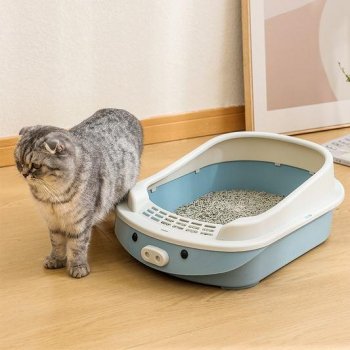
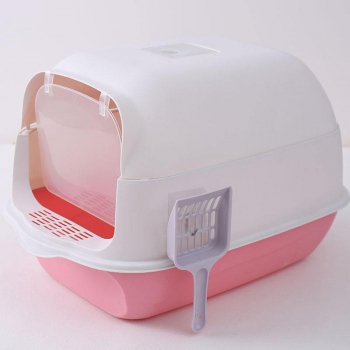
Cat litter box furniture is any enclosure that conceals the litter tray inside a cabinet, bench, or covered housing. Options range from fully enclosed boxes with a hinged lid, through semi-enclosed designs with a high back and open front, to cabinet-style units that hold a standard tray inside. All three hide the box; they differ sharply in airflow.
Semi-enclosed is the safest default. It gives the privacy and splash containment cats want while keeping sightlines open, which matters because cats dislike entering spaces with a single exit. Fully enclosed suits confident cats and worst-case odour control. Nervous cats, and cats in multi-cat homes where one bullies another, frequently refuse a full enclosure.
It concentrates it. An open tray disperses odour continuously; an enclosure holds it until the lid opens, which is why a hidden box needs daily scooping rather than every other day. If the enclosure smells bad to you when opened, it has smelled worse to your cat for days — their olfactory sensitivity far exceeds ours.
The internal tray should measure at least one and a half times your cat’s body length, and the enclosure needs headroom for the cat to stand fully and turn around. Cramped units get abandoned. For large breeds and cats over 12 pounds, oversized is not a luxury — it is the difference between use and refusal.
A laundry room, bathroom, or under-stairs nook with airflow, away from food and from high-traffic noise. Avoid anywhere a washing machine or boiler cycles loudly — a startled cat associates the noise with the box and stops going. In multi-cat homes, separate rooms beat one row of boxes in a single spot.
One per cat, plus one spare, in separate locations. This is the standard rule and it holds with enclosures too. A single hidden box in a two-cat home becomes contested territory, and the lower-ranking cat quietly finds an alternative surface elsewhere in the house.
Anti-splash height on the interior walls, a removable lid or top-entry access so scooping is not a contortion, a smooth interior that wipes clean, and a footprint that fits the intended spot with the door or lid fully open. Measure the open clearance, not just the closed dimensions — this is the most common sizing mistake.

From the full litter boxes and scoops range:
Also browse mats and houses for litter-catching mats, or all pet supplies.

Many do, because enclosure provides privacy during a vulnerable moment. Refusal usually traces to size, odour, or a single exit rather than the cover itself. Semi-enclosed designs resolve most objections by keeping sightlines open while still containing splash and litter scatter.
Scoop daily and empty fully every one to two weeks depending on litter type. Enclosures trap odour, so the schedule that works for an open tray is not sufficient here. Skipping days is the single most common cause of a cat abandoning an otherwise suitable box.
Not reliably. Cats guard resources, and an enclosure with one entrance is easy for a dominant cat to block. Provide one box per cat plus a spare, in separate rooms, so no single animal can control access to all of them.
For guidance on litter box problems and feline elimination behaviour, the ASPCA litter box problems guide is a reliable reference.

If you have any questions, here are some useful links:




Leave a comment