
A cat hammock suspends the cat above the floor in a fabric sling, which sounds like a novelty and turns out to be one of the few cat products that gets used daily. Cats want height, warmth, and a surface that contours around them. A hammock delivers all three in something that takes up no floor space at all.
The question is not whether your cat will like one. It is which mounting type suits your home, because that decision is harder to reverse than the bed itself.
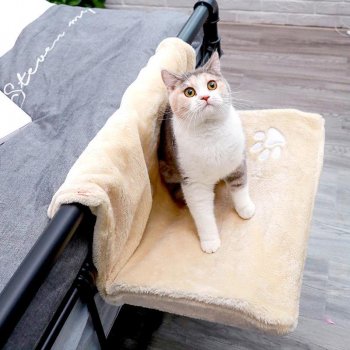
A suspended sling cradles the body on all sides, which mimics the pressure of an enclosed space while keeping sightlines open. It also sits above floor level, satisfying the elevation instinct, and the fabric holds body heat far better than a flat cushion. For a cat, that combination is close to ideal.
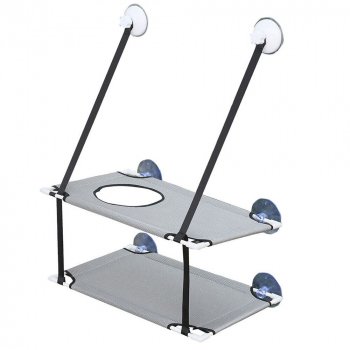
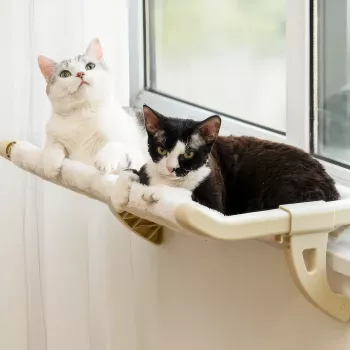
Window hammocks mount to glass with suction cups and deliver sun plus a view — the best stimulus, but dependent on smooth glass and a decent outlook. Hanging hammocks suspend from a frame or fixing and can go anywhere, including corners a window seat cannot reach. Tree-mounted hammocks come as part of a climbing unit, which suits cats that want height and scratching in one piece.
Most rate between 20 and 30 pounds, comfortably above the average cat. The rating is rarely the limiting factor — the mounting is. A suction cup on textured glass, or a hanging strap over a thin door, fails long before the fabric does. Match the mount to the surface before you worry about the number on the box.
Somewhere warm, elevated, and within sight of household activity. Cats want to observe from a safe distance, not from another room entirely. A hammock in a quiet spare bedroom gets ignored the same way an unused cat tree does, regardless of how comfortable it is.
The contoured support suits arthritic joints well, but access is the problem. Senior cats jump less and misjudge more, so a hammock they have to leap into will go unused. Mount low, or provide a step, or choose a floor-standing hammock frame instead of a suspended one.
Put a blanket the cat already sleeps on into it so the scent is familiar, place it in a sunny spot, and leave it alone. Do not lift the cat in. Most cats test it within a couple of days once it stops reading as a new object and starts reading as furniture.
For many cats, yes in warm months and no in cold ones. A suspended sling loses heat underneath, which is why cats often rotate between a hammock in summer and an enclosed bed in winter. Having both is not redundant — see cat cave beds for the cold-weather half.

Standalone hammocks, from mats and houses and beds and furniture:
Cat trees with a hammock built in, from cat scratchers and cat furniture:
For window-specific guidance see cat window perches, or the cat tree buying guide if your cat needs climbing too.

Yes, with correct mounting. The risks are a suction cup releasing from dirty or textured glass and a hanging strap slipping. Clean glass with alcohol before fitting, re-press the cups every few weeks, and check hanging fixings monthly. Mount low enough that a failure is not a serious fall.
Not usually. Most are sized and rated for one, and a suspended sling has a single comfortable position that cats will compete over. Two hammocks in separate spots works far better than one larger one in a multi-cat home.
Most fabric slings detach from the frame and machine wash cool. Check whether the structure is sewn into the fabric first — if it is, spot-clean only. Air dry rather than tumble, since heat shrinks the sling and changes how it hangs.
For guidance on resting, elevation, and enrichment needs for indoor cats, International Cat Care is a reliable non-commercial source.

If you have any questions, here are some useful links:



Leave a comment