
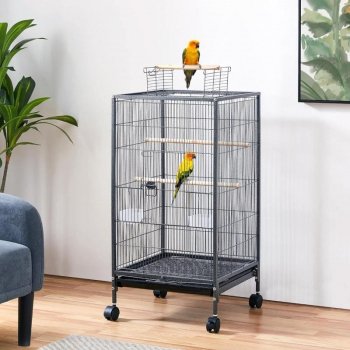
A bird cage is the one purchase where the common instinct — buy tall — is backwards. Birds fly horizontally, not vertically, so a tall narrow cage gives a bird a column it can only climb. Width and depth are what allow wing movement, and wing movement is what separates a housed bird from a confined one.
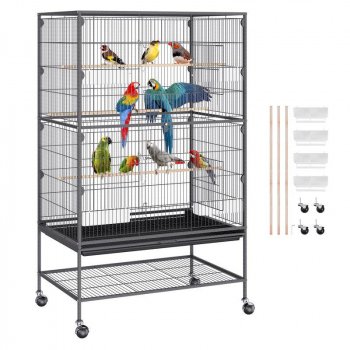
Wide enough for the bird to flap fully without touching the bars, and long enough to make at least one short flight between perches. As a working minimum, aim for two to three wingspans across. The AVMA’s guidance on selecting a pet bird notes birds need cages allowing space for climbing and walking, plus supervised daily exercise outside the cage.
Narrow enough that the head cannot pass through. Finches and budgies need roughly 1cm spacing, cockatiels and small conures around 1.5cm, larger parrots 2–2.5cm. Too-wide bars are a head-entrapment risk; too-narrow bars on a large parrot cage mean thin bars that a strong beak will bend. Horizontal bars on at least two sides let birds climb.
Against a wall rather than floating in the middle of a room, at roughly chest height, away from draughts, direct sun, and the kitchen. Cooking fumes — particularly from overheated non-stick coatings — are acutely toxic to birds. A corner position gives two solid sides, which most birds find far less stressful than exposure on all four.
Perches of varying diameter and texture, foraging and chew toys, and something to shred. A cage furnished only with two dowel perches is a cage that produces foot problems and boredom behaviours. Keep the flight path between perches clear — cramming toys into the middle removes the only open space the bird has.
Paper liner daily, food and water bowls daily, perches and toys weekly, full cage wash monthly. Droppings are also the earliest visible health indicator a bird owner has — changes in colour, volume or consistency show up on the liner days before a bird looks unwell, and a bird that hides illness gives you little else to go on.

Browse the full Bird Supplies range.
For cages built around length rather than height, see the flight cage guide, and for vet trips and evacuation see travel bird cages. Inside the cage: perch diameter and foot health, parrot toys and foraging, cuttlebone and calcium, and bathing.
No cage does. Even a large flight cage is a base rather than a habitat, and most companion birds need supervised time out daily to stay physically and behaviourally sound. Buying a bigger cage reduces how much that matters; it does not remove it.

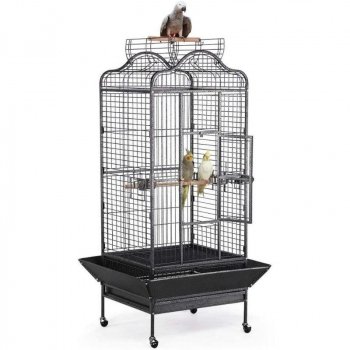
Generally yes — no corner to retreat to, and tapering bars at the top can trap toes and tails.
Most birds settle better covered, with airflow left on one side. Consistent dark hours matter more than the cover itself.
Powder-coated or stainless steel. Avoid zinc and galvanised metal, which are toxic if chewed.
Compatible species and individuals, in a cage sized for both plus separate feeding stations. Introduce gradually.
Not under a perch. Droppings contaminate anything directly below.
Around chest height. Floor level feels exposed; far above eye level makes handling harder.

If you have any questions, here are some useful links:



Leave a comment