
A cat cave bed is an enclosed or hooded bed that a cat can disappear into completely. If your cat sleeps under the duvet, inside boxes, or behind the sofa rather than on the expensive open bed you bought, this is the shape it was asking for.
Enclosed beds are not a style preference. They solve a specific problem for a specific kind of cat, and they are wasted on the rest.
Cats sleep 12 to 16 hours a day, and sleep is when they are most vulnerable. An enclosed bed removes exposure on five sides, so the cat can rest deeply instead of half-watching the room. Enclosure also traps body heat, which matters because a cat’s comfort temperature runs several degrees above ours.
Nervous cats, cats in busy or noisy households, cats living with dogs or children, and cats that already hide to sleep. Short-haired and small breeds also lose heat faster and seek enclosure in winter. A confident cat that sprawls in the middle of the floor will mostly ignore a cave bed — buy open for that cat.
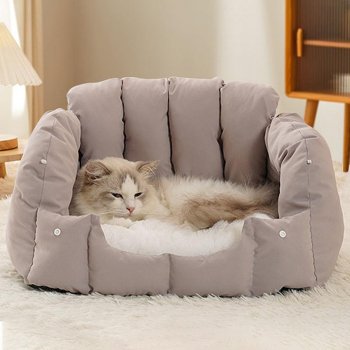
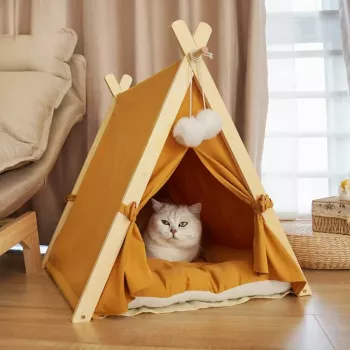
A cave bed is typically soft-sided with a single round entry, collapsing into a nest shape. A covered bed has a rigid hood over an open base. A pet tent is a structured fabric shell, usually larger, often suitable for small dogs too. All three enclose; they differ in how much structure holds the roof up over time.
The cat should fit curled with a little room, not sprawled. Oversizing an enclosed bed defeats it — the point is a snug space that holds heat and feels secure. Measure the cat curled up and add two to three inches. This is the opposite of the rule for open beds, where you size up.
They can, which is why cats abandon them seasonally and return in autumn. That is normal behaviour, not a rejection of the bed. A cave bed with a removable or foldable hood covers both seasons, and an open bed elsewhere in the house gives the cat a choice it will use.
Check for a removable cushion first — that is the part that gets dirty. Soft-sided caves often machine wash on a cool gentle cycle, but the shape relies on the filling holding structure, and hot washing collapses it permanently. Air dry rather than tumble, always.
Put it where the cat already hides, not where you want the cat to sleep. Add a worn t-shirt or an existing blanket so the interior smells familiar. Leave the entrance facing the room so the cat can see out. A cave bed facing a wall reads as a trap rather than a den.

From beds and furniture and mats and houses:
For open-topped options and the wider range, browse all pet supplies. If your cat wants height rather than cover, see the cat tree buying guide.

Generally yes. Enclosure reduces the vigilance an anxious cat maintains while resting, which is why hiding spots are standard advice for stressed cats. It is a comfort measure, not a treatment — persistent anxiety, hiding all day, or a sudden change in behaviour warrants a vet visit rather than a new bed.
Two to four years for a soft-sided cave in regular use. The hood is the failure point — repeated entry gradually flattens it until the cave stops being a cave. Beds with a rigid or felted structure hold their shape considerably longer than loose-filled ones.
If your cat currently sleeps in boxes, under furniture, or inside bags, almost certainly. If it sleeps stretched out in open floor space, probably not. Existing sleeping behaviour predicts this better than any product feature.
For guidance on feline behaviour and environmental needs, International Cat Care is a reliable non-commercial source.

If you have any questions, here are some useful links:



Leave a comment