
“Cat tower” and “cat tree” describe the same category of furniture, but the word people reach for tends to signal what they want: a tall, vertical unit on a compact footprint. This guide covers choosing one. For the wider category including low multi-platform designs, see the cat trees and cat towers buying guide.
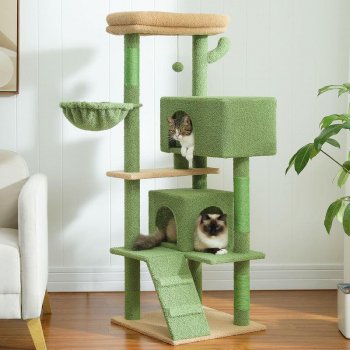
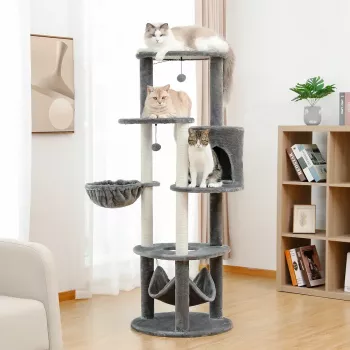
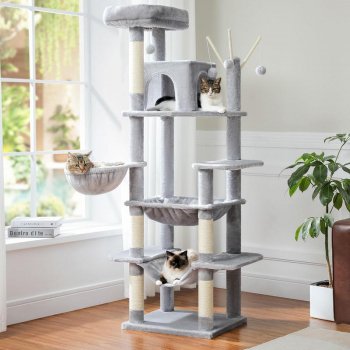
A cat tower is a vertical multi-level structure combining scratching surfaces, perches, and often an enclosed condo, built to give indoor cats elevated territory without consuming floor space. The distinction from a cat tree is loose and mostly marketing, but towers typically emphasise height on a narrow base while trees spread wider across multiple branching platforms.
Most towers occupy between two and four square feet at the base. That footprint must be wider than you expect relative to height, because stability comes from base width, not weight alone. A tall tower on a narrow base tips when a cat launches off the top perch, and a single tipping incident is usually enough to make a cat abandon the tower permanently.
Tower implies vertical emphasis and a compact base. Tree implies branching platforms at varied heights. Condo refers specifically to the enclosed cube compartments used for hiding and sleeping, which appear as a feature within both. Nearly all current models blend the three, so compare actual features — perch width, post material, total height — rather than the name on the listing.
Three to five levels suits most single-cat homes. More levels matter in multi-cat households, where separate platforms at different heights let cats establish hierarchy without conflict. Vertical spacing between levels should be roughly the cat’s body length, since gaps too wide force jumping that senior cats and heavy breeds will avoid entirely.
Senior cats still want height but lose the ability to jump for it. Choose a tower with closely spaced levels, a ramp or stepped entry, and perches with raised edges for secure resting. Placing the lowest platform within easy step height from the floor determines whether an older cat uses the tower at all.
They help substantially, but only when the scratching surfaces are sisal and positioned where the cat already scratches. A tower placed across the room from the damaged sofa will not redirect the behaviour. Combine placement with the techniques in our cat scratching post guide for the fastest habit transfer.
Tighten every bolt fully, then re-tighten after a week of use — initial settling loosens fixings and wobble develops quietly. Place the tower against a wall or into a corner for lateral support. If the floor is carpeted and uneven, shim the base rather than accepting a slight rock, because cats detect movement long before you do.

Browse all cat scratchers and cat furniture, or start here:

Vacuum the platforms and posts weekly with an upholstery attachment to lift hair before it mats into the fabric. Spot-clean marks with diluted enzyme cleaner rather than bleach, which repels cats. Sisal posts need no cleaning beyond vacuuming — shredded fibre is normal wear, not damage.
Four to six feet suits most cats, with a minimum of 28 inches so the cat can stretch fully against a post. Levels should sit 12 to 14 inches apart. The height only helps if the cat can reach it comfortably, so spacing matters as much as the total figure on the box.
A mid-range tower costs less than one sofa repair and redirects scratching permanently rather than suppressing it. The money is wasted only when the unit is too small, too narrow at the base, or placed in a room the cat avoids. Buy for stability and position before features.
Yes, if it has separate platforms at different heights. Cats establish hierarchy vertically, so multiple levels let each claim its own space. A single-perch tower in a two-cat home becomes contested, and the lower-ranking cat stops using it entirely.
For broader feline welfare and behaviour guidance, the Cornell Feline Health Center is a reliable non-commercial reference.

If you have any questions, here are some useful links:



Leave a comment