
A dog muzzle carries a stigma it does not deserve. It is a management tool — the same category as a seatbelt — and the dogs that wear one are usually the ones whose owners are handling a known risk responsibly. The real failures are a wrong-type muzzle that blocks panting and a muzzle put on for the first time in a crisis.
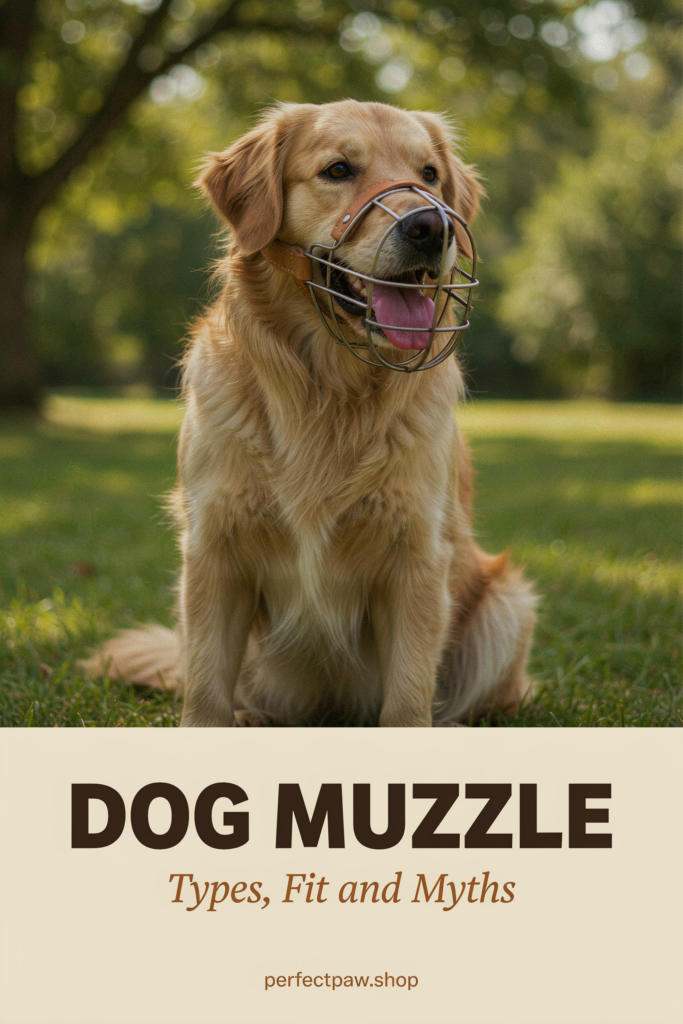
Three, and they are not interchangeable. Basket muzzles are open-framework and allow panting, drinking and treats — the only type suitable for extended wear. Soft sleeve muzzles hold the jaws closed and suit brief procedures only. Cornell’s canine health team sets out the comparison directly, noting muzzles are not painful and do not stop dogs breathing.
Because dogs cool themselves by panting, and a sleeve muzzle that holds the mouth shut removes that entirely. Twenty minutes in a soft muzzle on a warm day is a heat risk, not a training problem. Use them for a nail trim or an examination measured in minutes, and use a basket for anything longer.
Vet visits and grooming for dogs that have shown warning signs, walks for dogs with a bite history or reactivity, recovery from painful injury, and outdoors for dogs that scavenge and eat things they should not. A muzzle does not treat the underlying behaviour — it makes the situation safe while the behaviour is worked on properly.
The dog should be able to open its mouth fully and pant with the tongue extending past the teeth, with room to take a treat through the front or sides. Straps sit snug behind the ears — two fingers under the strap. A muzzle the dog can push off with a paw is not a safety device, and one that pins the mouth shut is the wrong type.
Not properly, and any product marketed on that basis should be treated with suspicion. Muzzles that restrict barking do so by clamping the jaw, which also blocks panting. Barking is a behaviour with a cause — attention, alarm, frustration, anxiety — and restraining the jaw addresses none of them.
Browse the full Dog Training range.
For long-wear muzzles and conditioning, see basket muzzle training, and for sizing below 20cm see muzzles for small dogs. Elsewhere in training: anti barking devices, agility equipment at home, talking buttons, and the potty training bell.
Never for the first time at the vet. Start weeks earlier at home: treats through the muzzle, on and off immediately, several short sessions a day. A dog that associates the muzzle with chicken wears it calmly; a dog that first meets one while frightened learns that the muzzle predicts bad things and fights it every time after.

No, when the type fits the purpose. A correctly fitted basket muzzle allows panting, drinking and treats.
With a basket type, yes. With a sleeve type, no — which is why those are short-use only.
Snout circumference just below the eyes, and snout length from eye line to nose tip. Add room for full mouth opening.
Never. Muzzles snag on furniture and fences, and an unsupervised dog cannot be helped if it does.
Yes. Standard shapes do not fit and restrict already-compromised breathing. Use a short-snout design.
No, but fighting a badly introduced muzzle raises stress. Condition it slowly and it becomes neutral equipment.

If you have any questions, here are some useful links:


Leave a comment