
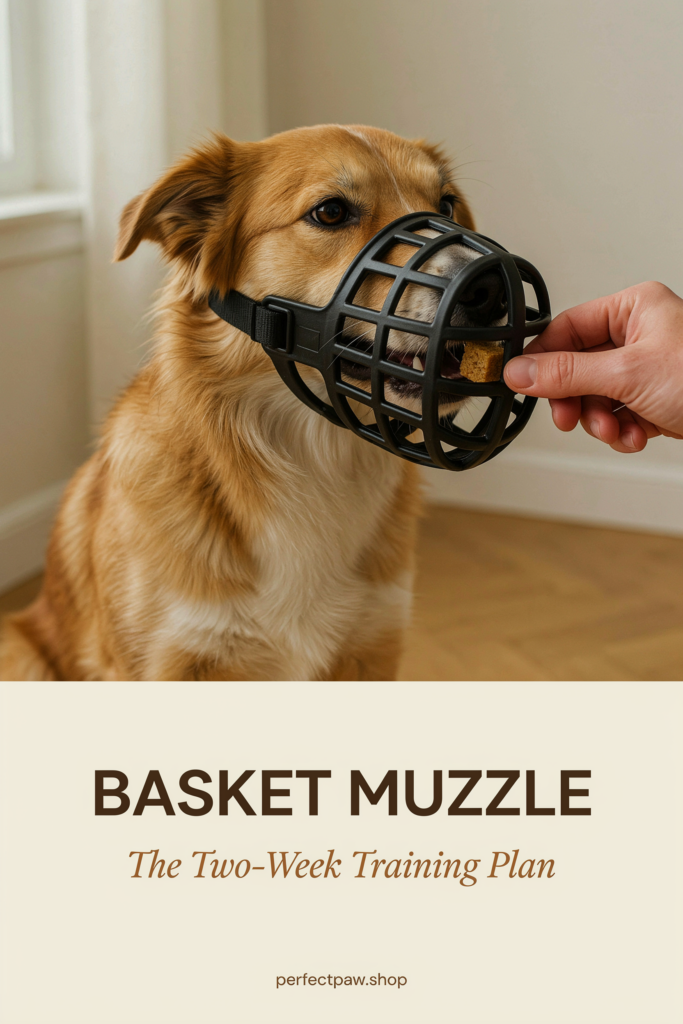
A basket muzzle is the only muzzle a dog should wear for more than a few minutes, and the only one worth conditioning to properly. The open framework lets the dog pant, drink and take treats through the front — which is exactly what makes the training method below possible. A muzzle the dog cannot eat through cannot be trained with food.
Because it restricts biting without restricting anything else. Cornell’s canine health team describes it as a useful tool to humanely prevent dog bites or to prevent dogs from eating things outside that are dangerous or toxic, with a properly fitted version permitting panting, drinking and treat consumption. Nylon sleeve muzzles do none of that.
Two weeks of short daily sessions for most dogs, longer for dogs with a bad muzzle history. Sessions run five to ten minutes, several times a week, and you move to the next stage only when the current one is boring to the dog. Rushing produces a dog that tolerates the muzzle when calm and panics in it when stressed — which is the only time it matters.
Four. First, the muzzle appears and treats happen, no contact. Second, the dog puts its own nose in to reach food smeared inside — peanut butter, cream cheese, pâté. Third, the nose stays in for a few seconds while you feed through the front. Fourth, the strap is fastened loosely for a moment, then released and rewarded. Never fasten before stage four.
Holding the muzzle up and pushing it onto the dog. The dog should move into the muzzle, never the muzzle onto the dog — that single distinction is what separates a dog that presents its face voluntarily from one that ducks. End every session before the dog wants to stop, not after.
A centimetre or more of clearance in front of the nose, full mouth opening inside, tongue able to extend past the teeth, and a neck strap you can fit two fingers under. Too short at the front is the common sizing error — it looks fine until the dog needs to pant hard, and then it is a heat risk.
See the full dog muzzle guide or browse Dog Training.
Before you need it. Puppyhood is ideal because there is no negative history to overwrite, but any dog can learn it. Treating muzzle training as a routine life skill — like a harness or a nail trim — means the equipment is already neutral on the day an injury, a vet visit or a reactive encounter makes it necessary.

Yes, from a bowl deep enough for the basket to enter. Test it at home before relying on it on a walk.
Supervised, for the length of a walk or a vet visit. Never unattended, and never left on at home.
Go back a stage. Pawing means the duration outran the conditioning.
Largely yes, which is a common reason to use one for dogs that eat things on walks.
That is the point of the design. Use soft treats that push through the front bars.
Lighter and warmer in cold weather; wire is more durable. Both work if fitted with front clearance.

If you have any questions, here are some useful links:


Leave a comment