
A cat bed is the easiest cat purchase to get wrong, because the thing that determines whether it gets used has almost nothing to do with the bed. It is about where the cat already sleeps, how enclosed it likes to feel, and whether the bed holds heat. Get those three right and the cat moves in within a day. Get them wrong and you have bought a decorative object.
This guide covers how to choose, then links to the right shape for your cat.
Cats sleep 12 to 16 hours a day and will find somewhere regardless — a bed just makes that somewhere predictable, washable, and off your pillow. It also gives the cat a territory of its own, which matters in multi-pet homes where sleeping spots get contested. The practical benefit is control over where the hair goes.
Measure the cat curled up, then add two to three inches. Cats sleep curled far more often than stretched, and an oversized bed feels exposed rather than generous. This runs opposite to dog beds, where sizing up is usually right. For an average adult cat, 16 to 20 inches across suits most shapes.
Watch where your cat sleeps now. A cat that sprawls in open floor space wants an open or bolster bed. A cat that disappears into boxes, under duvets, or behind furniture wants an enclosed cave bed. Semi-enclosed splits the difference with a raised back and open front, and is the safest guess when you genuinely do not know.
Almost always placement, not product. A bed in a quiet spare room gets ignored because cats sleep where they feel both safe and informed — near household activity, slightly elevated, out of the main traffic path. Move the bed to where the cat already naps before concluding it dislikes the bed.
Yes. A cat’s thermal comfort zone sits several degrees above ours, which is why they hunt out sunbeams and laps. Enclosed and thick-walled beds trap body heat and get used more in winter, while a raised or open bed is preferred in summer. Most cats rotate seasonally, so two beds is not redundant.
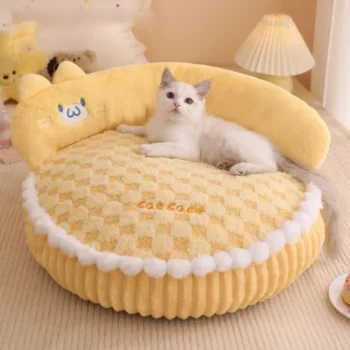
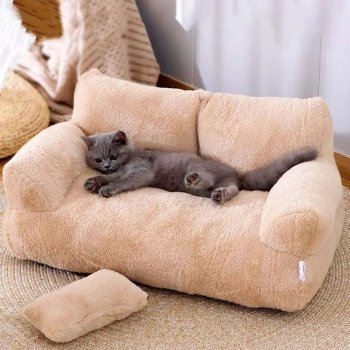
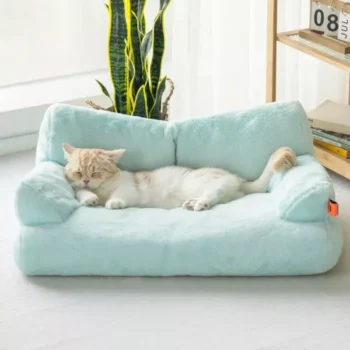
Donut beds have a raised rim the cat can rest its head on and suit curled sleepers. Sofa and nest styles give a flat base with partial sides for cats that like to stretch and lean. Tent and house shapes fully enclose. Shape matters less than enclosure level — pick the enclosure first, then the shape you like.
Yes, and specifically a removable cover rather than a fully washable bed. Filling degrades when machine washed repeatedly, so a bed with a zip-off cover outlasts an all-in-one by years. Check the cover comes off before buying — many listings say washable and mean the whole thing.
Two or three, in different rooms and at different heights. Cats rotate sleeping spots through the day following sun and household activity, and a single bed cannot track that. This is also why the bed you bought gets ignored in the afternoon and used at night — the cat is not rejecting it, just rotating.

From beds and furniture and mats and houses:
Related guides: cat cave beds for hiders, cat hammocks for elevated sleepers, and the cat tree buying guide if the cat wants height as well as rest.

Warmth and security. You are warmer than any bed and you signal safety. It is not a verdict on the bed. Placing the bed near where you sit, and adding a worn item of your clothing to it, transfers enough of both to shift some of those hours across.
Every two to four weeks, more often if the cat goes outdoors or there are allergies in the house. Wash cool — hot water degrades the filling and shrinks covers. Beds with a removable cover make this routine rather than a chore, which is the real reason they last longer.
Slightly elevated, near household activity but out of the direct path, and away from the litter box and food. A sunny spot beats a dark corner every time. If the cat already naps somewhere specific, put the bed there rather than choosing for it.
For guidance on feline resting behaviour and environmental needs, International Cat Care is a reliable non-commercial source.

If you have any questions, here are some useful links:



Leave a comment