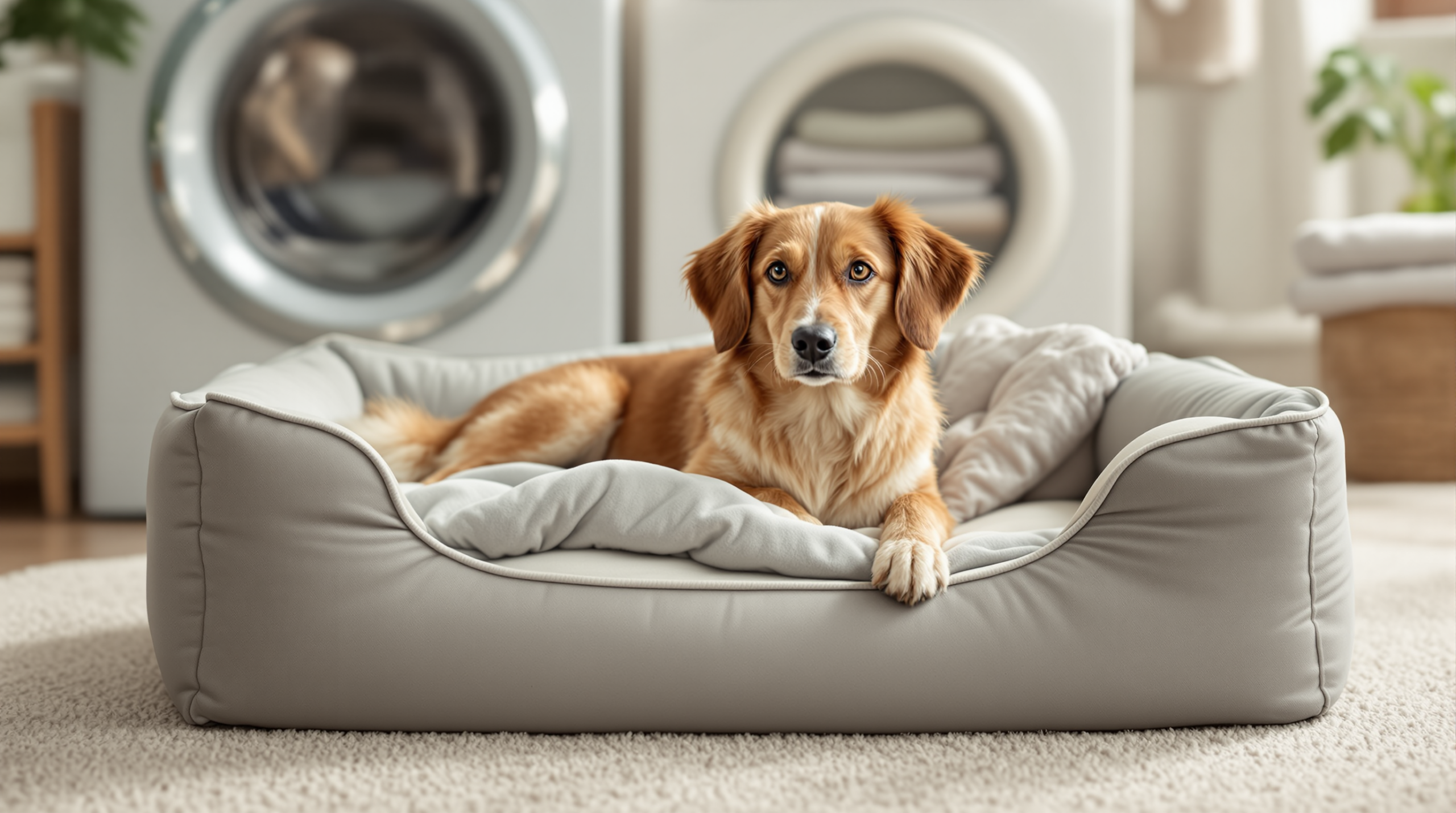
A washable dog bed sounds like a feature every bed should have, and almost every listing claims it. The distinction that actually matters is whether the cover comes off. A bed described as washable where the whole thing goes in the machine is a bed with a countdown on it — the filling degrades a little with every cycle.
Here is how to tell the difference before you buy, and how to wash either kind without ruining it.
A zip-off cover that separates completely from the filling or foam core. That lets you wash the part that gets dirty at whatever frequency the household needs, while the core stays untouched. Beds where the cover is stitched in force you to choose between a clean bed and a bed that still supports the dog.
Removable cover, almost always. Foam loses structure when soaked and can take days to dry fully, and damp foam grows mould in the middle where you cannot see it. Fibre-filled beds survive machine washing better but clump and lose loft over time. A fully washable bed is acceptable for a small lightweight bed you expect to replace yearly.
Every two to four weeks in normal use. Weekly if the dog goes outdoors in mud, sheds heavily, has skin problems, or if anyone in the house has allergies. Between washes, vacuum the surface with an upholstery attachment — most of what builds up is hair and dander, and vacuuming removes it before it works into the fabric.
Cool to warm, 30 to 40°C, on a gentle cycle. Hot water shrinks covers so they no longer fit the core, and it mats plush and faux fur permanently. If you need to sanitise after illness or a parasite problem, use a pet-safe laundry sanitiser at low temperature rather than turning the heat up.
Unscented, dye-free detergent, and no fabric softener. Dogs have far more sensitive skin than people, and residue from heavily fragranced products is a common trigger for itching that owners blame on food. Enzyme cleaners are the right tool for accidents, since they break down odour rather than masking it — which stops the dog re-marking the same spot.
Air dry wherever possible. Tumble drying shrinks covers, melts synthetic backing, and permanently flattens plush pile. If you must use a dryer, use the no-heat air setting and accept it will take hours. A cover that has shrunk will never fit the core properly again, and a loose or stretched cover bunches under the dog.
Confirm the zip runs far enough to actually remove the cover rather than just opening a flap. Check whether a waterproof inner liner is included, which matters for puppies and senior dogs. Look for a non-slip base, and check whether replacement covers are sold separately — the cover always fails first.

From beds and furniture and mats and houses:
See also the complete dog bed buying guide and orthopedic dog beds.

The cover, yes. The whole bed, only if the manufacturer says so and the bed is small enough to tumble freely — a bed packed tight in the drum does not clean and can damage the machine. Foam cores should never go in a washing machine at all.
Enzyme cleaner, not detergent alone. Odour comes from organic residue that ordinary detergent leaves behind, and masking it with fragrance makes the problem worse for the dog’s nose. Soak affected areas in enzyme cleaner before washing, and air dry outdoors when you can.
For puppies, senior dogs and any dog with incontinence, yes. A liner between cover and core is the difference between washing a cover and replacing a bed. It adds a slight crinkle some dogs dislike at first, but most stop noticing within a few days.
Two, if replacements are available. A spare means the bed stays in use on wash day rather than the dog relocating to your sofa, and rotating two covers roughly doubles the life of each one.

If you have any questions, here are some useful links:



Leave a comment