
A dog collar does three jobs: it carries identification, it gives you something to hold in an emergency, and on some dogs it is the walking attachment. Most people buy for the third job and end up with a collar that fails at the first two.
This guide covers types, fitting, materials and when a harness is the better choice. Each section links to a deeper guide if you already know what you need.
Two fingers should slide flat between the collar and the neck — no more, no less. Tighter restricts breathing and rubs the coat bare. Looser lets a dog back out of it when it panics or pulls sideways, which is the single most common way dogs get loose on walks. Check the fit monthly on adults and weekly on growing puppies.
High on the neck, just behind the ears, rather than low near the shoulders. A collar that slides down sits on the widest part of the neck, which makes it both easier to slip out of and more likely to put pressure on the trachea when the dog pulls. If it keeps sliding down, it is too loose.
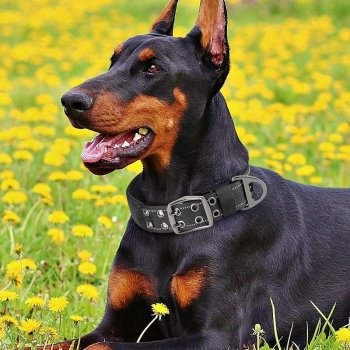
A flat buckle collar suits most dogs and is the default for ID. A martingale tightens to a limited point and suits narrow-headed breeds like Greyhounds and Whippets that slip flat collars. Tactical and handle collars give you a grip point for control. For dogs that pull, the answer is usually a harness rather than a different collar.
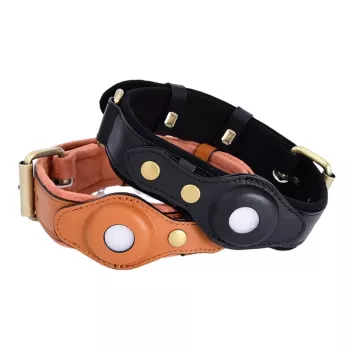
Nylon is light, cheap, washable and available in every colour, but it frays over time and holds smell when wet. Leather softens with wear, lasts years and resists odour, but costs more and needs drying properly if it gets soaked. Neoprene-lined collars suit swimmers and dogs with sensitive skin because they dry fast and do not chafe.
For identification, yes for most dogs. The exceptions are dogs left in crates unsupervised, dogs that play rough with other dogs where a jaw can catch a collar, and dogs with skin conditions in that area. Remove it at those moments rather than abandoning identification entirely.
Harness for any dog that pulls, any flat-faced breed, any dog with a collapsing trachea or neck issue, and most small breeds. A collar is fine for walking a dog that already walks on a loose lead without tension. The distinction is about where force lands: a collar concentrates it on the throat, a harness spreads it across the chest.
Worth it if you walk before sunrise or after dark, which most owners do for half the year. Reflective stitching works when headlights hit it; LED collars make the dog visible from any angle without a light source. Both matter more on unlit roads and for dark-coated dogs that disappear at dusk. See reflective dog collars.
Wrap a soft tape around the neck where the collar will sit, add two fingers’ width, and check that number against the adjustable range rather than the size name. Size labels vary wildly between makers, and an extra inch of adjustment either side is what stops a collar becoming useless after one growth spurt or winter coat.

From collars, harnesses and leashes:
Also see dog leashes, cat collars, and no-pull harnesses.

Two fingers flat between collar and neck. If you can only fit one, it is too tight; if three slide through easily, the dog can back out of it. Recheck after seasonal coat changes, since a winter coat can make a correctly fitted summer collar feel tight.
Most can, but it is worth removing overnight if the collar has a tag that jingles, if the dog is crated, or if you notice hair thinning under it. Constant wear in one position is what causes the bare ring some dogs develop around the neck.
None of them — pulling is solved with equipment that redirects rather than restrains. A front-clip harness changes the mechanics so pulling no longer moves the dog forward. Collars that tighten under tension address the symptom while adding pressure to the throat. The Cornell Riney Canine Health Center is a reliable reference on canine health considerations.
When the webbing frays, the buckle shows cracking, or the adjustment holes have stretched — typically one to three years depending on material and whether the dog swims. Check the D-ring too: that is the part that fails silently and the part everything else depends on.

If you have any questions, here are some useful links:



Leave a comment