
A cat collar carries identification, and that is its one important job. Unlike a dog collar it is not walking equipment — a cat should never be walked on a collar, because a cat that panics will either slip it or injure its neck against it.
The thing that matters most is the buckle, and it is the thing most buyers do not check.
Indoor-outdoor cats benefit clearly: a visible collar and tag tells a neighbour the cat is owned rather than stray, which is the most common reason healthy cats get taken to shelters. Indoor-only cats are a judgement call — the argument for is that indoor cats escape, and an escaped cat with no visible ID looks like a stray.
A breakaway collar has a buckle designed to release under sustained pressure. If the collar catches on a branch, a fence, a furniture leg, or another cat’s jaw during play, it opens instead of holding the cat trapped. Cats climb, squeeze through gaps and hunt in undergrowth, which creates snagging risks a dog never encounters.
For any cat with outdoor access, treat it as non-negotiable. A fixed-buckle collar that snags leaves the cat held by the neck with no way to free itself. The trade-off is losing collars, which is the point — a collar found on a fence has done exactly what it was designed to do.
Two fingers flat between collar and neck. Looser than that and a cat can get a front leg through it, which traps the leg under the collar and causes serious injury. That specific accident is common enough that it is worth checking the fit weekly rather than assuming it has stayed correct.
A bell reduces successful hunting, which matters if your cat brings home wildlife. Most cats habituate to the sound within days and it does not appear to distress them. Cats that clearly react badly to it — freezing, refusing to move — are the exception and the bell should come off.
No. Use a harness. A cat that startles on a lead twists and reverses in a way that either slips a collar instantly or puts the full force of the escape on the throat. Cat harnesses use an H-shape or padded vest design and need a slow indoor introduction over days before any outdoor use.
Put it on before a meal so the collar becomes associated with food, and leave it for short periods that grow over a week. Expect scratching and some dramatic flopping for the first day or two. Most cats stop noticing within a week — the ones that keep fighting it usually have a fit problem rather than an attitude problem.

From collars, harnesses and leashes:
Check the buckle type on any collar before outdoor use. See also cat beds and cat trees.
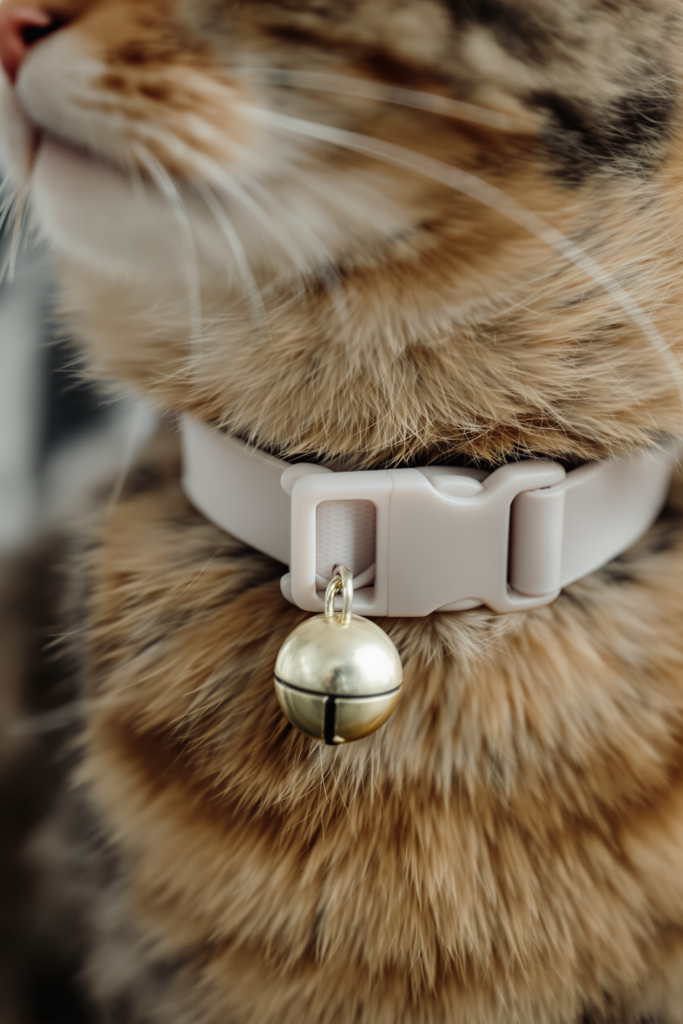
With a breakaway buckle and a correct two-finger fit, yes. The two real risks are a fixed buckle that cannot release when snagged, and a collar loose enough for a front leg to slip through. Both are preventable and both are the owner’s choice at the point of purchase.
It is a reasonable precaution rather than a requirement. Indoor cats do escape — through open doors, windows and during moves — and a cat with no visible ID is assumed to be a stray. A microchip is the permanent backup, but only a visible collar tells a stranger on the street that the cat has a home.
Around eight to twelve weeks, once the kitten is settled and eating well. Check the fit weekly during growth — kittens outgrow collars startlingly fast, and a collar that fitted a fortnight ago can become genuinely tight. For general kitten guidance, International Cat Care is a reliable non-commercial source.
That is the breakaway buckle working, so do not switch to a fixed one. Buy two or three at a time, keep a spare ready, and make sure a microchip is registered and up to date as the permanent identification that cannot be lost.

If you have any questions, here are some useful links:


Leave a comment