
A cooling dog bed solves a problem most owners notice before they name it: the dog abandons its lovely plush bed in June and lies on the kitchen tiles instead. Dogs shed heat mainly through panting and through contact with cool surfaces, and a thick padded bed blocks the second route entirely.
Tile works because it draws heat away. A cooling bed does the same thing on purpose, with somewhere comfortable to lie.
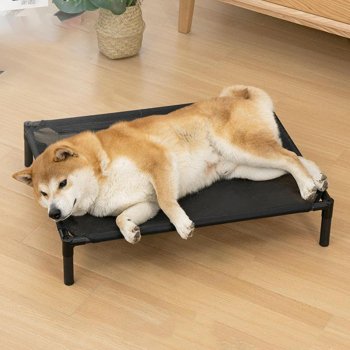
Most use a pressure-activated gel that absorbs body heat on contact, requiring no water, power or refrigeration. Others rely on elevated mesh that lets air circulate underneath, or on breathable woven fabric that avoids trapping warmth. Gel mats and breathable surfaces suit indoor use; elevated frames work best outdoors and in conservatories.
Gel mats measurably lower the contact surface temperature, which is the part of cooling a dog can feel. They are not air conditioning and will not cool a room. The realistic benefit is a surface several degrees below body temperature that stays that way for a stretch — enough to keep a dog settled through a hot afternoon.
Typically 15 to 30 minutes of active cooling per use, then the gel needs 15 to 20 minutes with no weight on it to recharge. That recharge cycle is why one mat is often not enough on a genuinely hot day — two lets the dog rotate while the other resets. It is the single most misunderstood part of the product.
Flat-faced breeds — Bulldogs, Pugs, Boxers, French Bulldogs — because compressed airways make panting far less effective. Thick double-coated breeds like Huskies, Malamutes and German Shepherds. Senior dogs, overweight dogs, and black-coated dogs that absorb more radiant heat. For these dogs it is a safety measure in summer, not a comfort upgrade.
Gel mats give the strongest immediate effect and suit dogs that lie still. Elevated frames provide constant airflow with no recharge cycle and last longer, but offer no padding. Breathable woven beds are the mildest option and the most comfortable for all-day use. Many households end up with a gel mat for peak heat and a breathable bed as the everyday bed.
The gel in reputable mats is non-toxic, but a punctured mat should be removed immediately — the gel is not meant to be eaten and the mat stops working once the seal is broken. For determined chewers, an elevated mesh frame or a breathable fabric bed is the safer choice. Signs of overheating warrant a vet, not a product: the Cornell Riney Canine Health Center covers canine heat risk.
Out of direct sunlight, on a hard floor rather than carpet, and in the coolest room the dog is willing to use. Direct sun defeats a gel mat within minutes, and carpet insulates it from underneath so it warms up faster. A shaded tiled floor is the ideal base.

From beds and furniture and mats and houses:
For winter, see orthopedic dog beds, or the complete dog bed buying guide.

No. Pressure-activated gel mats work at room temperature and self-recharge when unweighted. Putting one in the freezer makes it uncomfortably cold and can damage the gel. If a product requires freezing, it is an ice pack rather than a cooling mat.
They can, but most dogs stop choosing it once the weather turns, because the same heat-drawing property that helps in July is unwelcome in December. Keeping a warm bed available alongside lets the dog pick, which is what they do anyway.
Wipe gel mats with a damp cloth and mild soap — never machine wash, which ruptures the gel seal. Breathable fabric beds and elevated frame covers usually machine wash cool. Check the seams on a gel mat regularly; a small split ends the product’s life.
Two to four years with careful use. Failure shows as reduced cooling before any visible damage, as the gel loses its capacity to absorb heat. Punctures end it immediately, which is why chewers and cooling gel are a poor combination.

If you have any questions, here are some useful links:





Leave a comment