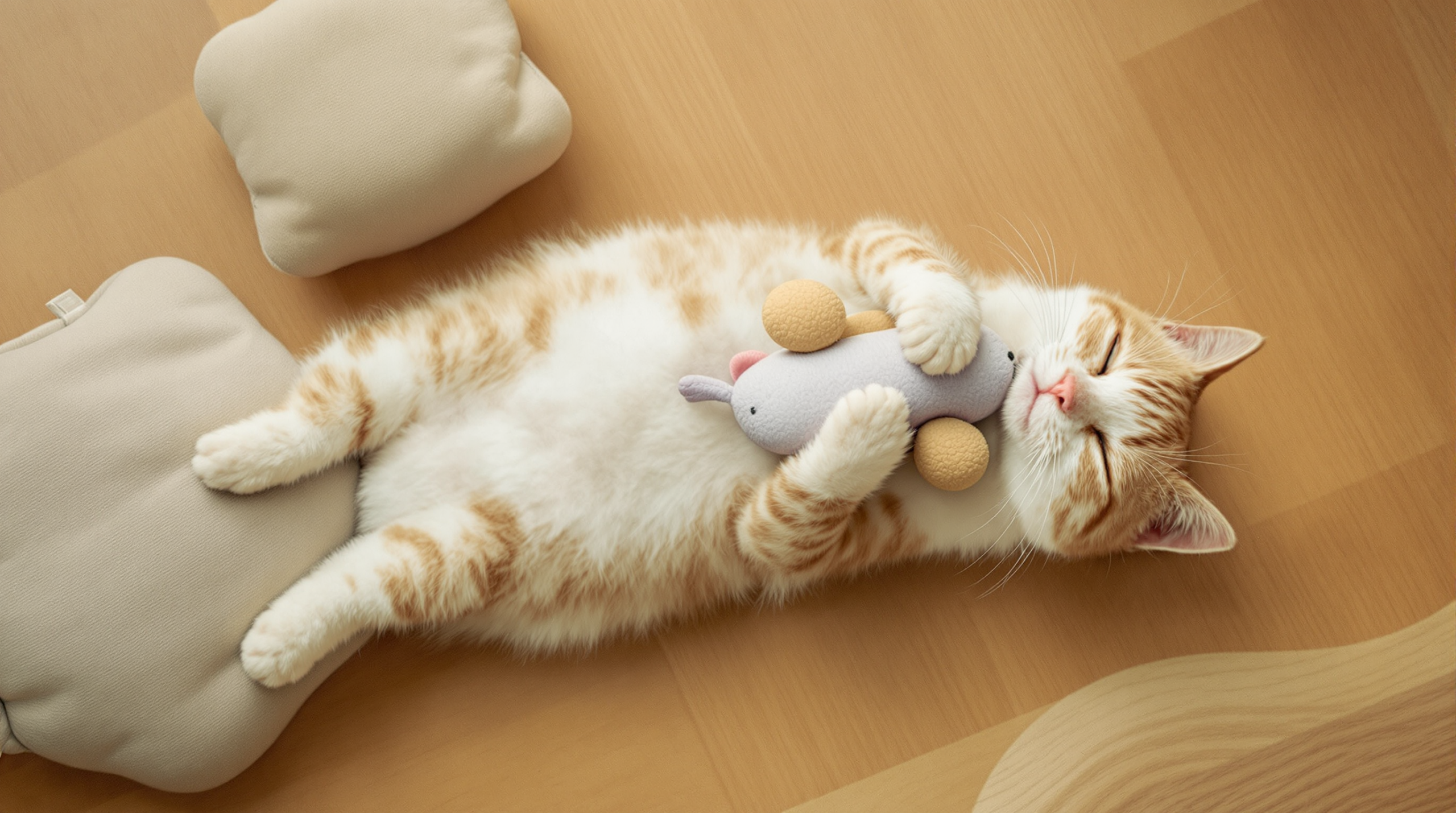
Catnip toys are the cheapest reliable entertainment you can buy a cat — right up until you discover your cat is one of the ones that does not care. That happens more often than the packaging suggests, and it is not a defective cat.
Here is how catnip actually works, why some cats ignore it, and what to use instead when they do.
Catnip contains nepetalactone, a compound that binds to receptors in a cat’s nasal tissue and triggers a response in the brain regions governing emotion and behaviour. The effect is entirely sensory rather than digestive — the cat is reacting to the smell, not to eating it. A typical response lasts five to fifteen minutes.
Because sensitivity to catnip is hereditary, and roughly a quarter to a third of cats simply lack the trait. No amount of stronger catnip changes that. Kittens also do not respond until around three to six months of age, so a kitten ignoring a catnip mouse is developmentally normal rather than a sign of anything.
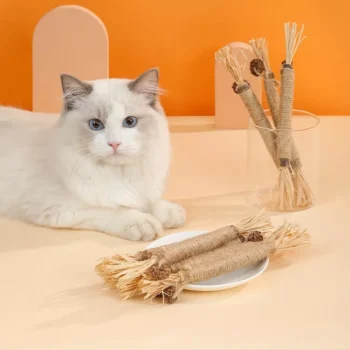
Silvervine, sometimes sold as matatabi, works on a majority of cats including many that do not respond to catnip. Valerian root and Tatarian honeysuckle are the other two alternatives worth trying. If your cat ignored catnip, one of these three usually produces a response, which is why variety packs exist.
The catnip does, not the cat. Nepetalactone degrades with air exposure, so a toy left out permanently stops smelling of anything within weeks. Store catnip toys in a sealed container between sessions and bring them out a few times a week — the toy comes back potent and the novelty resets at the same time.
Overexposure does not poison a cat, but constant access desensitises the response and eating large quantities can cause mild digestive upset. A few sessions a week produces a stronger reaction than daily access. Some cats become over-aroused and swat or nip during the effect — that is the moment to stop, not to keep playing.
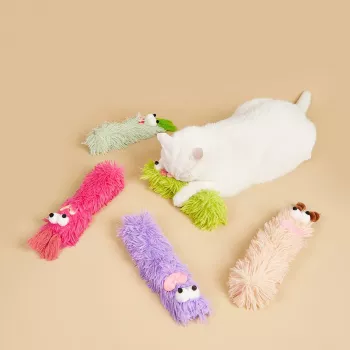
Refillable toys outlast sealed ones, because the catnip is the part that expires rather than the fabric. Kicker toys — long enough for a cat to grab with the front paws and rabbit-kick with the back — suit the physical part of the response. Dental catnip toys combine the scent with a chewing surface, which suits cats that bite rather than roll.
Yes. It is non-addictive and non-toxic, and cats self-regulate — they walk away when the effect fades rather than seeking more. Kittens and pregnant cats are usually advised to avoid it as a precaution, and any specific health question belongs with your vet rather than a product page.

From pet toys:
See also interactive cat toys and cat wand toys for the hunting side of play.

Roughly two thirds to three quarters. The trait is inherited, so a non-responsive cat will never develop the response no matter how often it is offered. Try silvervine before concluding your cat does not enjoy scent toys at all.
Two or three times a week produces a stronger response than daily. Constant access dulls the reaction, which is the most common reason owners report catnip “stopped working” when the cat simply stopped noticing it.
Both, in sequence. Smelling it typically produces an energetic phase — rolling, rubbing, vocalising — followed by a relaxed one. Eating catnip tends to have a more sedative effect than smelling it, which is why some cats go quiet after chewing a toy.
It works on a larger proportion of cats, including many catnip non-responders, and the response is often stronger. Catnip remains more widely available and cheaper. For general feline behaviour and enrichment guidance, International Cat Care is a reliable non-commercial source.

If you have any questions, here are some useful links:



Leave a comment