
Dog clothes divide opinion, and most of the argument comes from treating every dog the same. For a Greyhound in February, a coat is thermoregulation. For a Husky in the same weather, it is an obstruction. Both answers are correct for their dog.
This guide covers which dogs genuinely need clothing, how to measure so it fits, and what each garment type is actually for.
Some do. Thin-coated and small breeds lose heat faster than they generate it — Greyhounds, Whippets, Chihuahuas, Italian Greyhounds, Dachshunds and most toy breeds. Senior dogs, puppies, short-haired dogs and dogs with thin body fat also struggle. Thick double-coated breeds like Huskies, Malamutes and German Shepherds generally need nothing, and a coat can trap heat they need to shed.
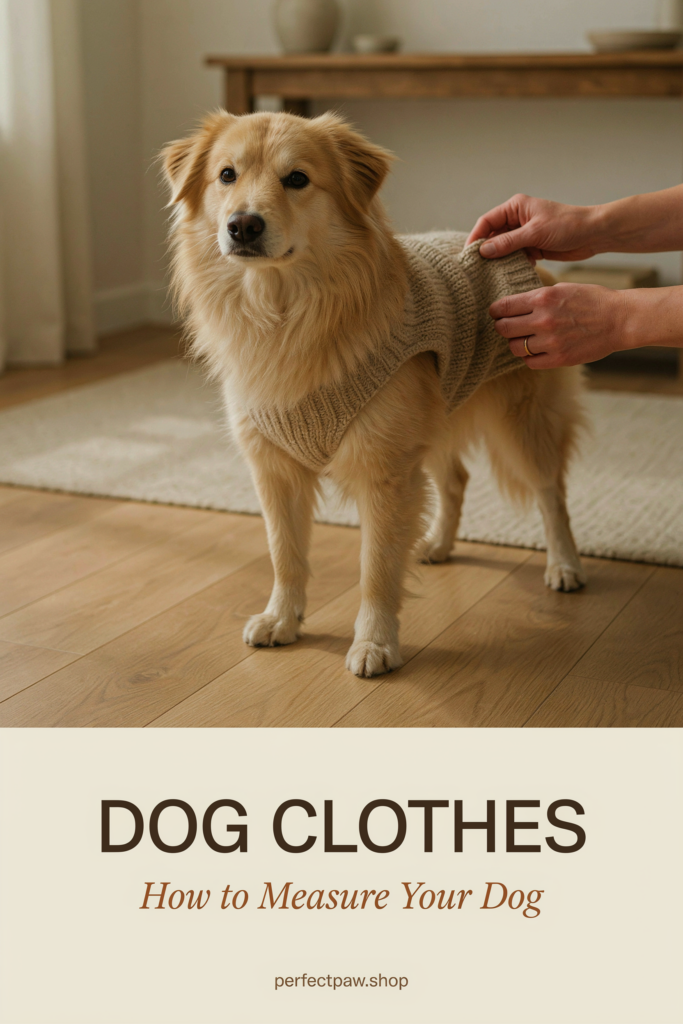
Three measurements, and back length is the one people skip. Measure neck circumference where a collar sits, chest girth at the widest point just behind the front legs, and back length from the base of the neck to the base of the tail. Chest girth is the load-bearing measurement, but back length decides whether the garment sits properly or bunches under the belly.
Winter coats and sweaters for cold-sensitive dogs. Raincoats for dogs that refuse to walk in wet weather or take hours to dry. Cooling vests for flat-faced breeds in summer. Boots for salted pavements and hot tarmac. Everything else — bandanas, costumes, dresses — is for you rather than the dog, which is fine as long as it fits comfortably.
A dog sweater is knitted or fleece, breathable, and suits indoor use and mild cold. A winter coat has an outer shell that blocks wind and usually water, with insulation underneath, for genuine cold and wet. A sweater in driving rain is worse than nothing, because wet fabric against skin pulls heat away faster than bare coat.
Restrict shoulder movement, press into the armpits, cover the genitals or anus, or have loose parts a dog can chew off and swallow. Check the dog can walk with a full stride, sit, lie down and toilet without adjustment. Any garment that needs rearranging after every stop is the wrong shape for that dog.
Short sessions paired with food, starting indoors with something loose and light. Put it on, feed, take it off before the dog asks. Most dogs that hate clothing had it put on and left on the first time, and a dog that freezes and refuses to walk is not being dramatic — it is genuinely disoriented by the sensation.
Fleece for warmth without weight, knitted wool blends for indoor cosiness, coated polyester or nylon for weatherproof outer layers, and breathable mesh for summer. Avoid anything that only hand-washes, since dog clothing gets muddy and a garment you cannot easily wash becomes a garment you stop using.
From apparel and accessories:
Deeper guides: dog sweaters, dog winter coats, dog raincoats, dog pajamas and cooling vests.

Roughly below 7°C for small, thin-coated and senior dogs, and below freezing for most medium dogs with normal coats. Large double-coated breeds are comfortable well below that. Shivering, lifting paws, slowing down or refusing to continue are the signals that matter more than any number.
Indoors, no — take garments off when the dog is warm and settled. Continuous wear causes matting under the fabric and rubbing at the armpits, and a dog cannot tell you a seam has started to chafe. Clothing is for going out in, not for living in.
Easily. Dogs cool by panting and through contact with cool surfaces, and a coat blocks the second route. Check for heavy panting, drooling or seeking cold floors, and remove the garment indoors or in sun. For guidance on canine health and temperature, the Cornell Riney Canine Health Center is a reliable reference.
Go by measurements, never by breed name or weight. Size labels vary enormously between makers, and two 20-pound dogs can need different sizes entirely depending on chest depth and leg length. When between sizes, size up — a slightly loose garment is usable, a tight one is not.

If you have any questions, here are some useful links:


Leave a comment