
A cat window perch turns a windowsill into the best seat in the house. Cats will already be trying to use that spot — balanced on a narrow ledge, knocking over whatever you keep there. A perch just makes it viable.
It is also the cheapest way to add enrichment to an indoor cat’s day, because the entertainment outside the glass is free and changes constantly.
Three reasons stack. The window gives elevation, which cats seek for safety and surveillance. It provides warmth from direct sun, which they thermoregulate toward. And it supplies moving stimulus — birds, traffic, people — that an indoor environment otherwise lacks entirely. A window seat is enrichment, not decoration.
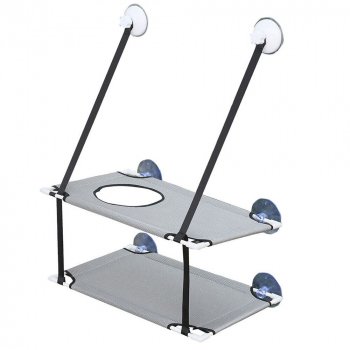
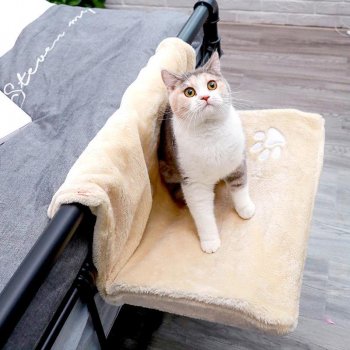
A perch is a rigid platform, usually mounted on brackets or suction cups, giving a flat surface. A hammock is a fabric sling suspended between fixing points, so the cat sinks into it. Cats that like to sprawl flat prefer perches; cats that like to be cradled and half-hidden prefer hammocks. Most cats accept either once the spot proves warm.
On clean, smooth glass, yes — good suction mounts hold well beyond a typical cat’s weight. Failures trace to three things: dirty or dusty glass, textured or frosted panes, and cold weather, which stiffens the rubber and lets air seep in. Clean the glass with alcohol before mounting, and re-press the cups every few weeks.
Most suction-mounted seats rate for 20 to 30 pounds, which covers nearly all cats with margin. The rating is not the real risk — the mount surface is. A unit rated for 30 pounds on smooth glass may hold nothing on a textured pane, and the failure is sudden rather than gradual.
South-facing where possible, for sun. Low enough that the cat can reach it from a nearby surface without a long jump, because a seat that requires an awkward leap gets used far less. And on a window that actually looks at something — a view of a blank wall provides elevation but none of the stimulus that makes the spot valuable.
Sometimes, partly. Counter-surfing is usually about height and about food. A window seat addresses the height half by offering a better elevated position, which reduces the appeal of the counter but does not remove it. Pair it with keeping food off the surface entirely.
It covers observation and warmth, not climbing or scratching. A cat with only a window seat still needs a scratching surface and, ideally, a climbing route. Think of it as one element of vertical territory rather than the whole thing.

For elevated perches as part of a larger climbing setup, see cat scratchers and cat furniture — many towers include wide perches and hammocks. Wall-mounted alternatives are covered in cat wall shelves, and full-height options in the cat tree buying guide.

Mount it at a height the cat can reach easily, then put a familiar blanket on it so it smells right. Do not place the cat on it. Most cats investigate within two days, and sun exposure does the rest — a warm surface sells itself faster than any encouragement from you.
Use caution. Kittens climb unpredictably and misjudge distances, so a suction-mounted seat above a hard floor carries real risk if a cup releases. Wait until the cat is fully grown, or mount low enough that a fall is inconsequential.
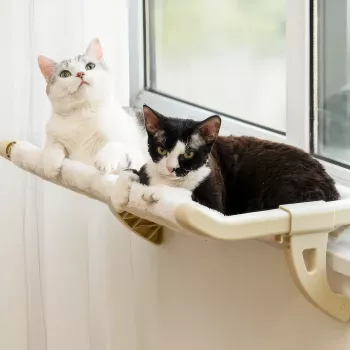
Rarely at once. Most seats are sized for a single cat, and window spots are prime territory that cats compete over. In a multi-cat home, two seats at separate windows prevents the standoff that otherwise ends with one cat never getting a turn.
For guidance on indoor enrichment and environmental needs, International Cat Care is a reliable non-commercial source.

If you have any questions, here are some useful links:



Leave a comment