Perfect Paw Perfect Paw
  • Shop
    • Best Sellers
    • Pets
      • Apparel & Accessories
      • Beds & Furniture
      • Bird Supplies
      • Cat Scratchers
      • Dog Training
      • Feeding Supplies
      • Fish & Aquatic Pets
      • Grooming
      • Indoor Supplies
      • Litter Boxes & Scoops
      • Mats & Houses
      • Pet Collars, Harnesses & Leashes
      • Pet Toys
      • Walking & Traveling Supplies
    • Puppy Care
      • Before You Get a Pet
      • Daily Routine & Care
      • Health & Safety
      • Nutrition & Hydration
      • Training & Enrichment
  • All Aquarium & Exotic PetsCat CareDog Care
Search
×
×
HomeBlogCat CareCat Wall Shelves: Height, Spacing, and the No-Drill Alternative

Cat Wall Shelves: Height, Spacing, and the No-Drill Alternative

Cat standing on staggered floating cat wall shelves mounted on a pale wall

Cat wall shelves solve a problem most cat owners eventually hit: the cat wants height, and the floor is already full. Mounted shelves give vertical territory without a footprint, which is why they show up in every small-apartment cat setup on the internet.

They are also the option most people abandon halfway through planning, once they find the studs, check the lease, and price the brackets. This guide covers how to do it properly — and the honest alternative if drilling is off the table.

Why cats want wall shelves in the first place

Height is a safety behaviour. An elevated cat can survey the room, stay clear of dogs and children, and retreat without being cornered. Indoor cats denied vertical routes use bookcases, wardrobe tops, and kitchen counters instead. The Cornell Feline Health Center treats vertical access as a core indoor enrichment need rather than an optional extra. Wall shelves formalise a route the cat is already trying to build.

How high should cat wall shelves be?

Start the lowest shelf 18 to 24 inches off the floor, then step upward with 12 to 16 inches of vertical rise between shelves and some horizontal offset. Cats climb diagonally, not straight up. A vertical ladder forces awkward jumps, while a staggered path lets the cat move at a natural angle.

How much weight do cat shelves need to hold?

Plan for at least four times your cat’s body weight. A landing cat delivers roughly three times its weight in downward force, and you want margin beyond that. For a 12-pound cat that means 50 pounds minimum per shelf — which in practice means mounting into studs, not drywall anchors.

Do cat wall shelves need to go into studs?

Yes, for anything a cat will jump onto. Drywall anchors fail under repeated dynamic load even when their static rating looks adequate, and they fail suddenly. Studs sit 16 inches apart in most homes, which is also why shelf spacing tends to follow stud spacing rather than the layout you sketched.

Are cat wall shelves a good idea for renters?

Usually not. A shelf run means a dozen or more screw holes in load-bearing positions you cannot patch invisibly, and most leases treat that as damage. Tension-mounted floor-to-ceiling cat trees deliver comparable vertical territory with zero wall fixings, which is why they dominate in rentals.

Wall shelves vs a cat tree: which should you choose?

Shelves win on floor space and on looking built-in. Cat trees win on cost, on being movable, and on including a scratching surface that shelves do not provide. A shelf run also needs a separate scratching post anyway, so the total spend often lands close. If you rent, or you are unsure about permanent fixings, the tree is the lower-risk choice.

Cat wall shelves guide: Height, Spacing, No Drilling

The no-drilling alternative

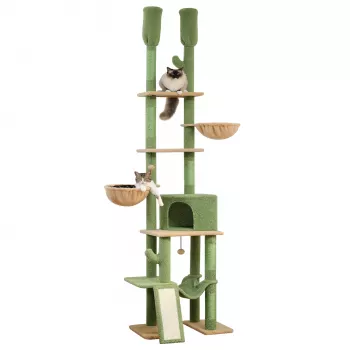
A floor-to-ceiling cat tree braces between floor and ceiling under tension, using roughly one square foot of floor while delivering full-height climbing. No studs, no holes, no landlord conversation, and it comes with sisal posts already fitted. Measure your ceiling height first — adjustable models cover a fixed range and will not tension outside it.

  • Cactus Cat Tower Floor-to-Ceiling Adjustable Cat Tree — smallest footprint, no fixings
  • Adjustable Tall Cat Tree — adjusts to ceiling height
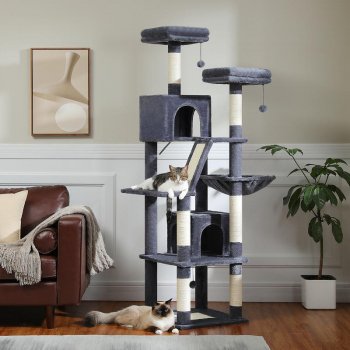
  • 180CM Tall Multi-Level Cat Tree Tower — full height, freestanding
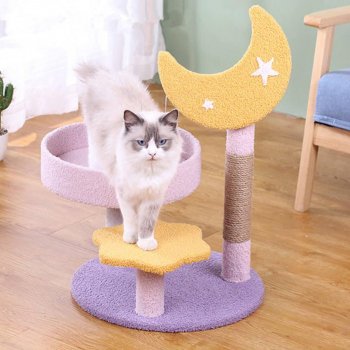
  • Three-Layer Cat Climbing Tower with Scratching Post & Jumping Platform — staggered levels like a shelf run

Browse all cat scratchers and cat furniture, or read the complete cat tree buying guide.

Single tabby cat standing on one of a staircase of staggered floating wooden wall shelves with carpeted treads mounted on a - cat wall shelves

Frequently asked questions about cat wall shelves

How far apart should cat shelves be?

Twelve to sixteen inches of vertical rise, with horizontal offset so the cat climbs diagonally. Kittens and senior cats need the lower end of that range. If a cat hesitates before a gap, it is too wide — and a hesitation usually becomes a refusal within a week.

Can cat wall shelves replace a scratching post?

No. Shelves provide climbing and perching but no scratching surface, and scratching is a separate instinct tied to claw maintenance and scent marking. A shelf run still needs a post nearby, or the cat keeps using the sofa.

Are wall shelves safe for older or heavier cats?

Only with close spacing and secure stud mounting. Heavy and senior cats jump less willingly and misjudge more often, so a fall from height carries real risk. For cats over 15 pounds or over ten years old, a floor-standing tree with closely spaced levels is the safer structure.

More buying guides from Perfect Paw

  • Small Dog Costume
  • Travel Bird Cage
  • Muzzle for Small Dogs
  • Fish Tank Thermometer
  • Paw Cleaner for Dogs
  • Dog Puzzle Toys

Cat Wall Shelves: Height, Spacing, and the No-Drill Alternative

Shop this story
Cactus Cat Tower Floor-to-Ceiling Adjustable Cat Tree

Cactus Cat Tower Floor-to-Ceiling Adjustable Cat Tree

Three-Layer Cat Climbing Tower with Scratching Post & Jumping Platform

Three-Layer Cat Climbing Tower with Scratching Post & Jumping Platform

180CM Tall Multi-Level Cat Tree Tower

180CM Tall Multi-Level Cat Tree Tower

Was this article helpful?

Yes No
Leave a comment
Cancel reply

Related Posts

Puppy wearing a small puppy bandana for the first time taking a treat
Dog Care

Puppy Bandana: First-Wear Training, Chewing Risk and Sizing as They Grow

Close-up of a slip-on dog bandana collar threaded onto a flat webbing collar
Dog Care

Dog Bandana Collar: The Slip-On Style and Why It Is Safer Than a Knot

Dog wearing a soft fleece tubular dog scarf on a bright winter walk
Dog Care

Dog Scarf: Winter Warmth, Wet Fabric and When a Coat Is the Answer

Perfect Paw Perfect Paw

If you have any questions, here are some useful links:

Frequent questions Contact Us
Newsletter

Subscribe to receive updates, access to exclusive deals, and more.

Support
  • About Us
  • Contact Us
  • Frequently Asked Questions
  • Privacy Policy
  • Refunds & Returns Policy
  • Shipping & Delivery
  • Terms and Conditions
  • Track your order
Our mission

perfectpaw.shop - your trusted destination for high-quality products and exceptional customer service. We are dedicated to providing a seamless shopping experience, with a diverse selection of items to meet all your needs.

Our commitment to quality and customer satisfaction is at the core of everything we do. We believe in offering products that bring value and joy to our customers, along with a shopping experience that is both enjoyable and effortless.

Pinterest
© 2026. All Rights Reserved. Terms, Privacy & Accessibility.
Top

Shopping cart

×
Subtotal
Proceed to Checkout
Shipping & taxes calculated at checkout
© 2026. All Rights Reserved. ECOMVERSE LLC 0