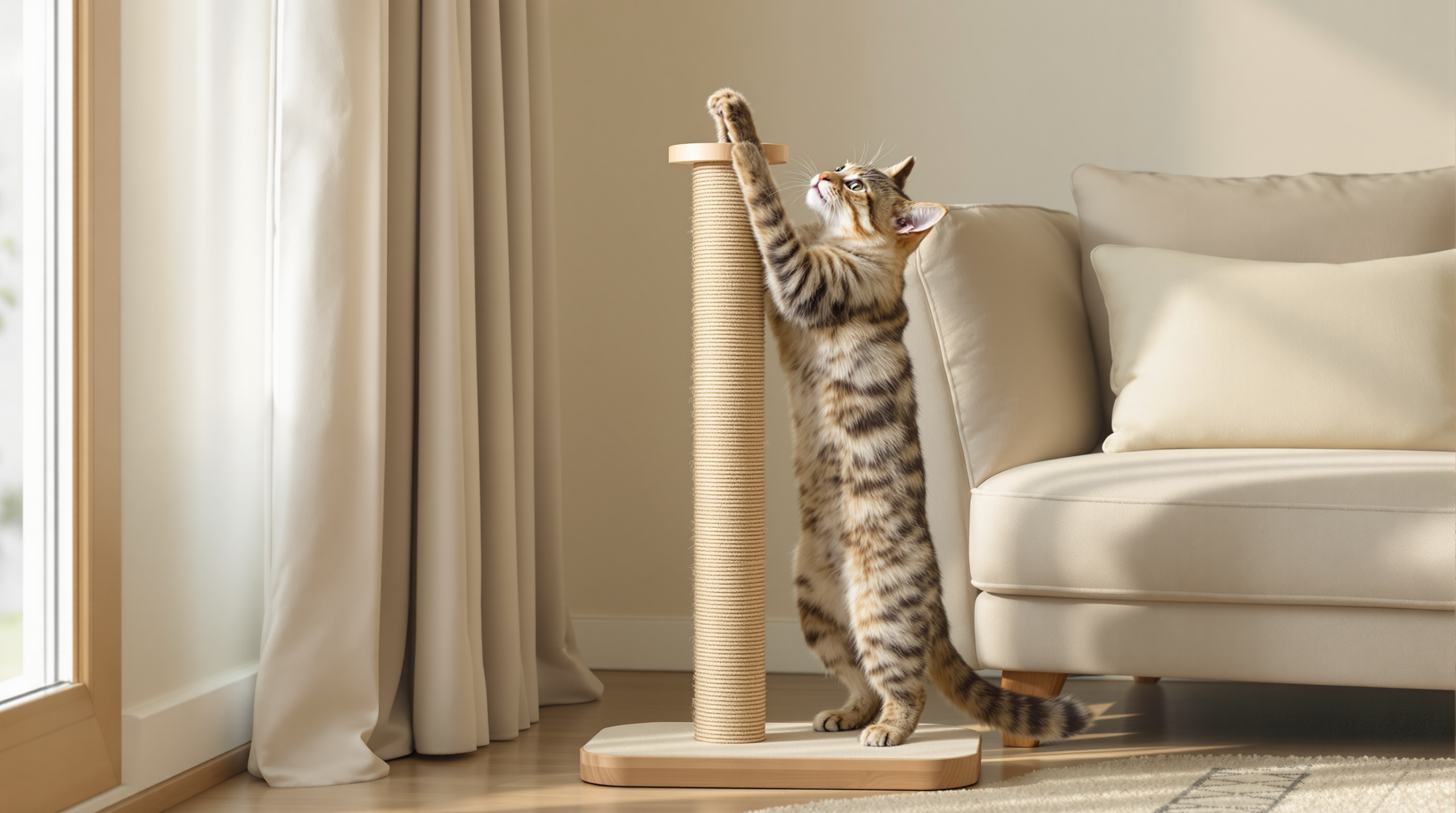
A cat scratching post is not optional furniture. Scratching is how cats shed the dead outer sheath of their claws, stretch their spine and shoulders, and mark territory with scent glands in their paws. A cat denied a post does not stop scratching — it scratches your sofa instead. Our full cat tree and cat tower buying guide covers the larger multi-level units; this page covers posts specifically.
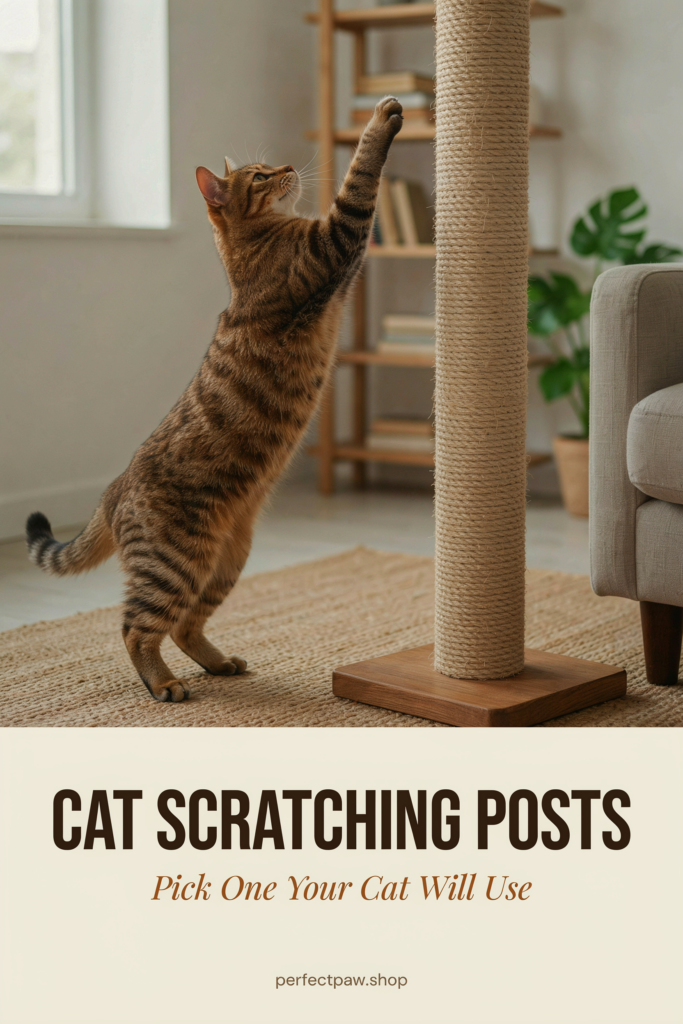
A scratching post must be tall enough for a full-body stretch, which means at least 28 inches for an average adult cat and 32 inches or more for large breeds. Cats scratch to lengthen the spine, not only to file claws. A post shorter than the cat’s stretched height delivers none of that benefit, which is the most common reason a new post gets ignored within a week.
Three causes account for nearly every rejected post. The post wobbles, so the cat does not trust it under full weight. It is too short for a complete stretch. Or it sits in a room the cat does not use — scratching is territorial, so posts belong where the family gathers, not tucked in a spare room. Fix stability first; a weighted or wide base solves most cases outright.
Sisal rope lasts longest and gives the vertical resistance cats prefer, making it the default choice for a permanent post. Cardboard is cheap and popular with cats but disintegrates within months and sheds debris constantly. Carpet is the weakest option — it frays into loops that snag claws, and it teaches the cat that carpet is an acceptable scratching surface, including the carpet on your floor.
Watch what your cat already damages. A cat clawing the sofa arm or door frame wants vertical. A cat working the rug or carpet wants horizontal. Many cats use both, at different times of day. If you are unsure, a unit combining an upright post with a flat scratch pad at the base covers both preferences without guessing.
Place the post where the cat already scratches, not where you would prefer it to be. Scratching marks territory, so the post belongs in a high-traffic room near a sleeping spot or entryway. Cats stretch and scratch immediately on waking, which is why a post beside the bed or favourite nap chair gets used far more than one placed in a corner.
Put a correctly sized post directly beside the damaged furniture, not across the room. Make the furniture less appealing by covering the target area temporarily. Reward use of the post when it happens rather than punishing the sofa, since punishment produces avoidance of you, not of the sofa. Once the habit transfers, the post can be moved gradually to a preferred spot.
The working rule is one post per cat plus one spare, placed in separate rooms. Scratching is territorial signalling, so a single post in a multi-cat home becomes contested and the lower-ranking cat finds an alternative surface. Separate placement matters more than total count — two posts side by side function as one.
Browse the full cat scratchers and cat furniture range:
Looking for a full multi-level unit instead? Read the cat trees and cat towers buying guide.

Scratching serves three purposes at once: it strips the dead outer layer from the claws, stretches the spine and shoulders, and deposits scent from glands in the paws as a territorial marker. The ASPCA guidance on destructive scratching makes the same point: the goal is redirecting the behaviour, not stopping it. Your sofa gets chosen because it is stable, tall, and in the middle of family activity — exactly the qualities a good scratching post needs.
Put a tall, stable post directly against the spot being scratched, not across the room. Cover the damaged area temporarily so it stops feeling rewarding. Reward the cat when it uses the post. Punishment does not work here — it teaches avoidance of you while the scratching continues when you are out.
Rub catnip into the sisal, place the post where the cat already stretches after waking, and praise any contact in the first week. Never carry the cat over and press its paws to the post; forced contact reliably creates avoidance. If it wobbles, fix that first — stability outranks everything else.
Sisal rope. It gives the vertical resistance cats want, lasts years rather than months, and sheds little debris. Cardboard is popular with cats but disposable. Carpet is actively counterproductive because it teaches the cat that carpet fibres are an approved surface, including the ones on your floor.
They work when they are tall enough for a full stretch, stable under full weight, and placed where the cat already scratches. Failures almost always trace to one of those three, not to the concept.

If you have any questions, here are some useful links:



Leave a comment