
A dog bowl is the one item your dog uses twice a day, every day, for its entire life. It is also the item most people replace only when it cracks — which means a lot of dogs are eating out of scratched plastic that should have gone years ago.
Material, size, height and stability all matter, and the differences are cheap to get right.
Stainless steel and ceramic are the two sound choices. Stainless is unbreakable, dishwasher safe and non-porous. Ceramic is heavier, so it stays put, and it is easier to find in shapes that suit a room. Plastic is the one to avoid long term: it scratches, and the scratches hold bacteria that a rinse does not reach.
Two reasons. Scratched plastic traps bacteria in grooves that cleaning misses, and some dogs develop contact irritation on the chin and muzzle from plastic bowls — a pattern often labelled chin acne. Switching to stainless or ceramic resolves it in many cases, which is a cheap thing to rule out before pursuing anything more complicated.
The bowl should hold a full meal with a little room, not sit brimming. Too small means food spills over the edge as the dog eats; too large means a deep bowl where a flat-faced dog struggles to reach the bottom. Width matters more than depth for most dogs — a wide shallow bowl suits more faces than a narrow deep one.
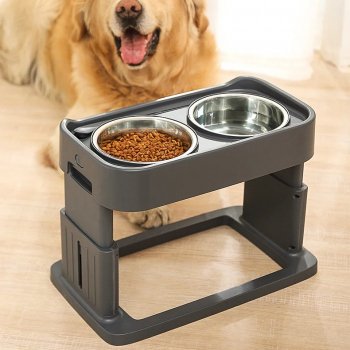
Raised bowls suit tall breeds, senior dogs with neck or spine stiffness, and dogs that regurgitate after eating from floor level. They are not universally better, and the relationship between raised feeding and bloat risk in large breeds has been debated for years. For most medium dogs, floor level is fine. See elevated dog bowls for the cases where height helps.
Weight or grip, ideally both. Heavy ceramic resists pushing on its own. Lighter bowls need a silicone rim or a mat underneath, since a bowl skating across a tiled floor is how dogs end up eating in a different room from where you put dinner. A feeding mat also catches the spill, which is the other half of the problem.
Food bowls daily, water bowls daily. A biofilm forms on the inside of a water bowl within about 24 hours — the slippery layer you feel when you run a finger round the base. Rinsing does not remove it; it needs washing with detergent or a dishwasher cycle.
Separate, usually. A combined food-and-water unit means kibble ends up in the water and the water needs changing every time the dog eats. Separate bowls also let you place water somewhere the dog passes often, which encourages drinking — worth it for any dog that does not drink much.

From feeding supplies:
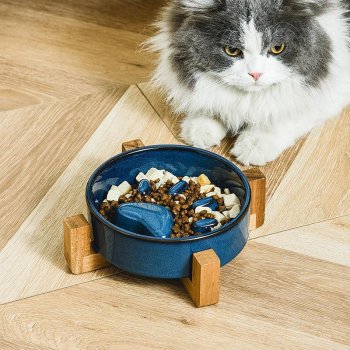
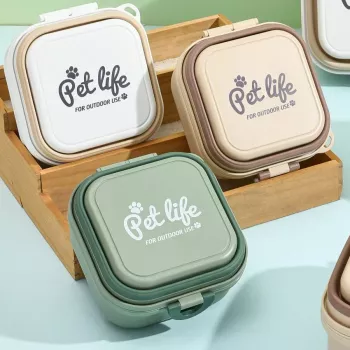
See also slow feeder bowls, travel water bottles and cat food bowls.

Both are good. Stainless wins on durability and is effectively unbreakable. Ceramic wins on stability because of its weight, and on looking like part of the room. The deciding factor is usually whether your dog pushes its bowl around — if so, choose ceramic.
At least two — one for food, one for water — plus a travel option. In multi-dog homes, give each dog its own food bowl placed apart, since resource guarding around a shared bowl is a common and avoidable source of conflict.
Plastic as soon as you see scratching. Ceramic at the first chip or crack, since the glaze is what makes it hygienic and a crack lets moisture into the body of the bowl. Stainless lasts more or less indefinitely unless it dents badly enough to stop sitting flat.
Usually because the bowl is light and moves as it eats, sometimes because a metal bowl makes a noise the dog dislikes, and occasionally as a learned attention-getting behaviour. A weighted ceramic bowl on a non-slip mat removes the first two causes at once.

If you have any questions, here are some useful links:



Leave a comment