
A Christmas dog costume has one thing Halloween does not: a deadline everyone knows about months in advance. That matters, because the difference between a dog that poses happily and one that endures the photo is roughly two weeks of five-minute sessions. Buy in October, condition through November, photograph in December.
Weeks ahead. Cornell’s veterinary team describes the approach as cooperative care — teaching dogs to voluntarily participate in handling through gradual exposure at the dog’s pace, paired with positive reinforcement. Introduce the costume with treats before it ever goes on, keep sessions short, and stop before the dog wants to.
Because the setting is the opposite of Halloween. Heating on, fire lit, a full house, and costumes built from fleece and plush rather than thin nylon. A double-coated dog in a padded outfit in a warm living room is carrying two coats. Watch for heavy panting and seeking out cold floors — both mean the costume comes off.
Have everything ready before the costume goes on: camera out, lighting sorted, treats in hand, someone standing behind you to get the dog’s attention. Put the costume on last and take the photos in the first two minutes, while it is still novel. Dogs look best in the first thirty seconds and progressively more resigned after that.
Tinsel and ribbon, which cause serious intestinal obstructions if swallowed. Chocolate, raisins and mince pies at coffee-table height. Lit candles near a wagging tail. Tree lights with chewable cables. The costume is usually the safest item in a room full of Christmas hazards, but it can also make a dog clumsier around them.
For a dog already stressed by a house full of visitors, a bandana or a bow tie gets the same photograph without adding a second thing to cope with. Christmas gatherings are already a high-arousal day for most dogs — the costume should not be the thing that tips it over.
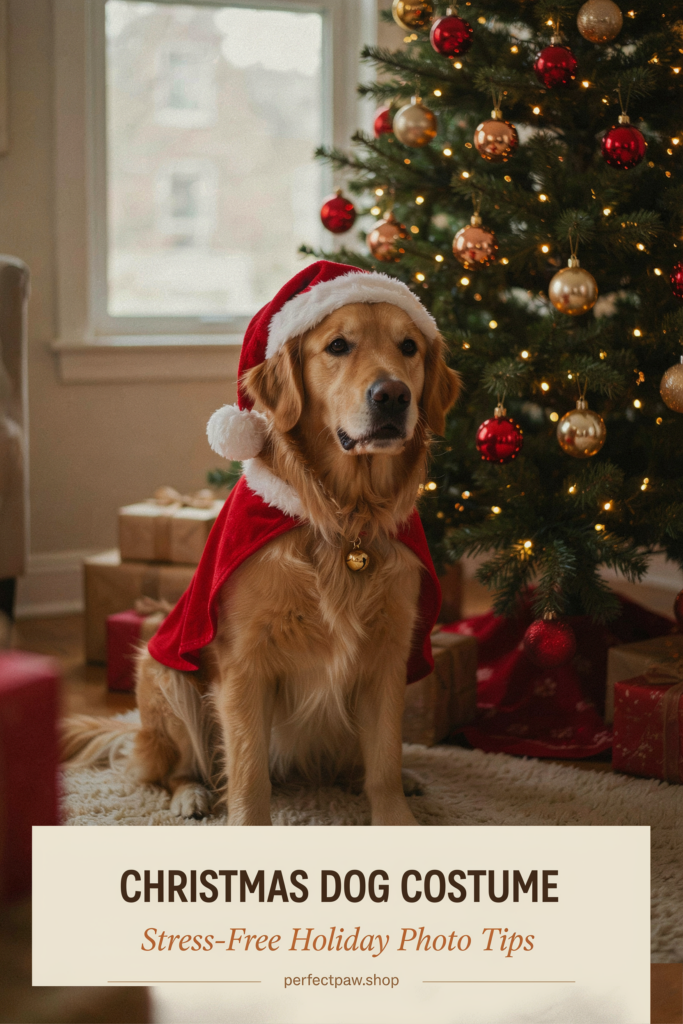
See the full dog costume guide or browse Apparel & Accessories.
No, and the distinction is worth keeping. A costume is a novelty garment for indoor photos. A winter coat is weatherproof outdoor equipment for thin-coated dogs. Costume fabric absorbs water and holds it against the skin, which is how damp coats turn into skin problems — wear it inside, walk in a proper coat.

October, so there is time to size-exchange and condition the dog before December.
Five minutes total, costume on for two.
Better not. Long wear plus a warm room plus food on the table is a poor combination.
Dogs change with age and with what happened in between. Re-condition rather than assuming last year carries over.
Anything on the head is poorly tolerated and easily chewed once removed. Skip them for most dogs.
Most cats tolerate costumes far less than dogs. A festive collar is the realistic limit.

If you have any questions, here are some useful links:


Leave a comment