
A Halloween dog costume is the easy part of the night. The hard part is everything around it — a door opening every four minutes to strangers in masks, a bowl of chocolate at dog height, and an excited household. More dogs go missing on 31 October than on almost any other night of the year, and most of them leave through an open front door.
The AVMA’s rule is that a costume should fit comfortably, carry no choking hazards, and not block your pet’s sight, hearing, breathing, mouth, or movement, with the dog acclimated beforehand. Masks and head coverings fail that test more often than any other costume component.
Chocolate and xylitol in sugar-free sweets, both toxic. Raisins, which damage kidneys. Glow sticks, which cause dramatic drooling when chewed. Lit candles and carved pumpkins at tail height. And the sweet wrappers themselves, which cause obstructions. Put the bowl somewhere a dog cannot reach, not just somewhere it has not reached yet.
Do not rely on recall on the busiest doorbell night of the year. Set the dog up in a back room with a chew and background noise, or use a baby gate two metres inside the front door as a second barrier. Check the collar, tag and microchip details are current before the evening starts, not after.
Anxious dogs, reactive dogs, anything that barks at the doorbell normally, and seniors that startle easily. A stream of masked strangers is an unusually intense stimulus, and a dog that copes with normal visitors may not cope with forty of them in costume. Isolating them is not exclusion — it is the humane call.
Usually a bad idea. Crowds, darkness, dropped sweets on every pavement, and children who approach fast and at face height. If you do, keep the dog on a short lead rather than a retractable one, add a reflective or LED element to the costume, and turn back the moment the dog starts scanning and pulling.
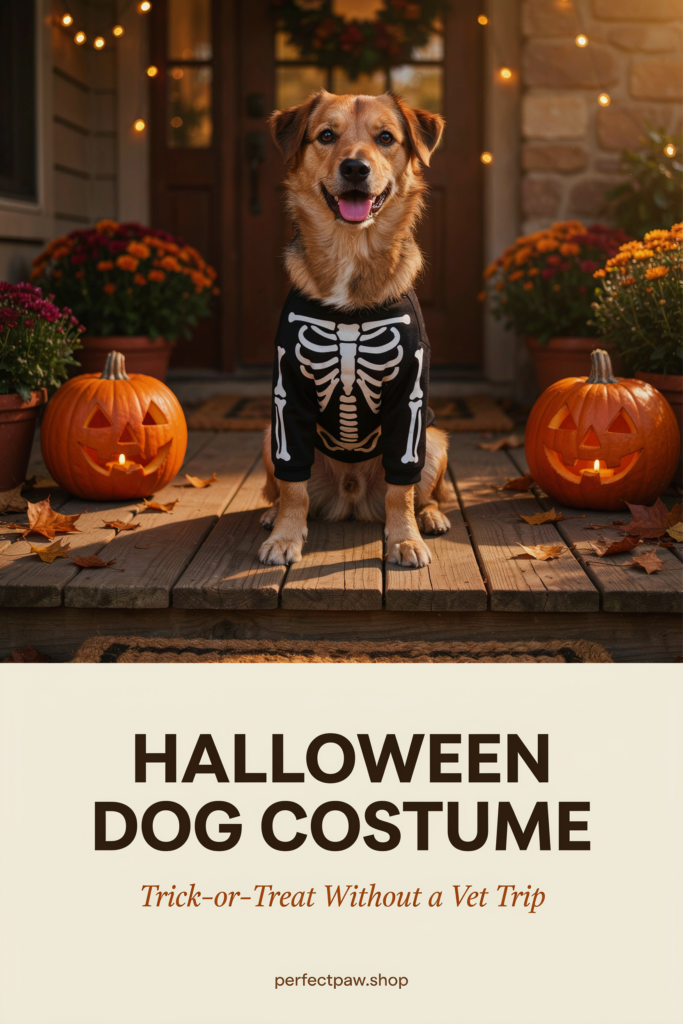
See the full dog costume guide, or browse Apparel & Accessories.
A themed bandana, photos taken at home in daylight, and the dog settled somewhere quiet by the time it gets dark. You get the pictures without the dog spending four hours in a heightened state. This is the option most owners land on after one difficult Halloween.

Call your vet or an emergency line immediately with the type and amount. Do not wait for symptoms.
Fine if the dog cannot chew the battery unit. Batteries are a serious ingestion risk.
No. Anything covering the face restricts sight and breathing.
At least a week before, in short sessions with treats.
No. Minutes at a time, supervised, then off.
Move it to a back room with a chew before the first knock, rather than trying to manage it once the evening starts.

If you have any questions, here are some useful links:


Leave a comment