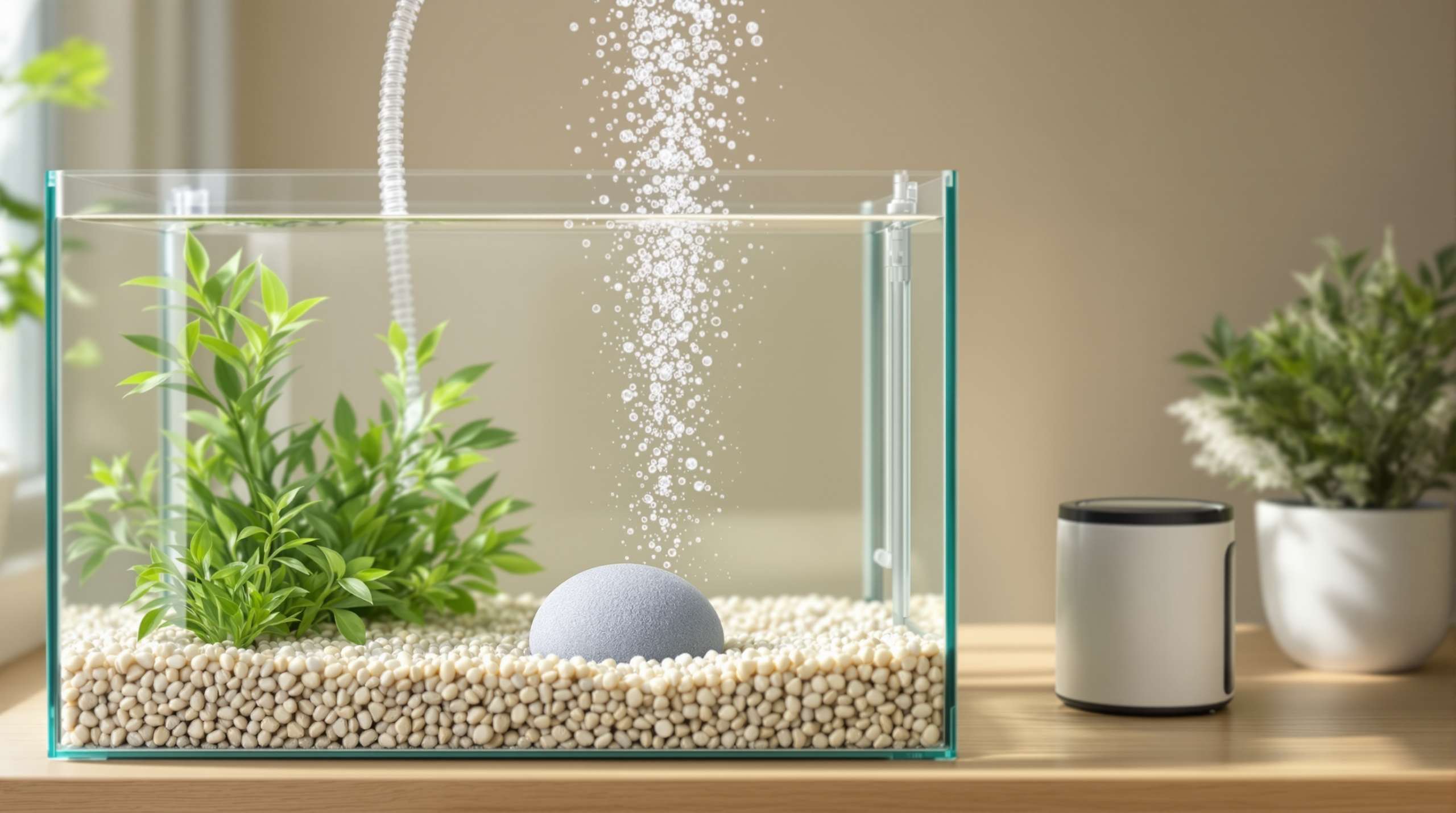
An aquarium air pump does not add oxygen the way most people picture it. The bubbles themselves transfer very little — what matters is the surface agitation they create as they break, because gas exchange happens at the water surface. Understanding that changes both whether you need one and where you point it.
Indirectly. Rising bubbles drag water upward and disturb the surface, and that surface movement is where oxygen enters and carbon dioxide leaves. A pump with the airstone buried under decor does far less than one placed where the column reaches the top cleanly. If your filter already breaks the surface well, a pump may add little.
Warm water, heavy stocking, a still surface, medication that depletes oxygen, and any tank with a sponge filter that runs on air. Warm water holds less dissolved oxygen than cool water, which is why summer is when under-aerated tanks fail. Fish gasping at the surface is the last warning, not the first.
UF/IFAS puts the working target at 5 mg/L or higher, with most fish becoming distressed between 2 and 4 mg/L and mortality typically below 2 mg/L. The visible sign of trouble is piping — fish gasping at the surface — usually alongside a sudden stop in feeding, and it appears in the largest fish first.
Three fixes, in order of effect. Lift the pump off the hard surface onto a folded towel or foam pad, because most of the noise is vibration transmitted into furniture. Position the pump above water level or fit a check valve so water cannot back-siphon into it. Then, if it still hums, replace the diaphragm — worn diaphragms rattle.
Deep and to one side, not centred under the filter outflow. Deeper placement gives the bubble column a longer rise and more water movement per bubble. Keeping it away from the filter intake stops the filter pulling air in, which makes impellers noisy and cuts pumping efficiency.

See the small fish tank guide and the aquarium filter guide, or browse Fish & Aquatic Pets.
In a planted tank, especially yes. Plants produce oxygen under light and consume it in darkness, so dissolved oxygen falls to its daily low in the early morning hours. A pump running overnight covers exactly the window when a heavily planted tank is most likely to run short.

Rarely harmful chemically, but strong flow stresses bettas and fry. Turn it down rather than off.
Yes, if the pump sits below the water line. Without one, a power cut siphons tank water into the pump.
Mineral and bacterial clogging. Soak it in a dilute vinegar solution, rinse thoroughly, or replace it — stones are consumables.
For most small tanks, yes. It aerates and provides biological filtration from the same pump.
Only a battery or USB-rechargeable one. That is the main argument for buying a rechargeable model.
Usually, but ammonia damage to gills causes the same behaviour. Test the water before assuming aeration is the fix.

If you have any questions, here are some useful links:


Leave a comment