
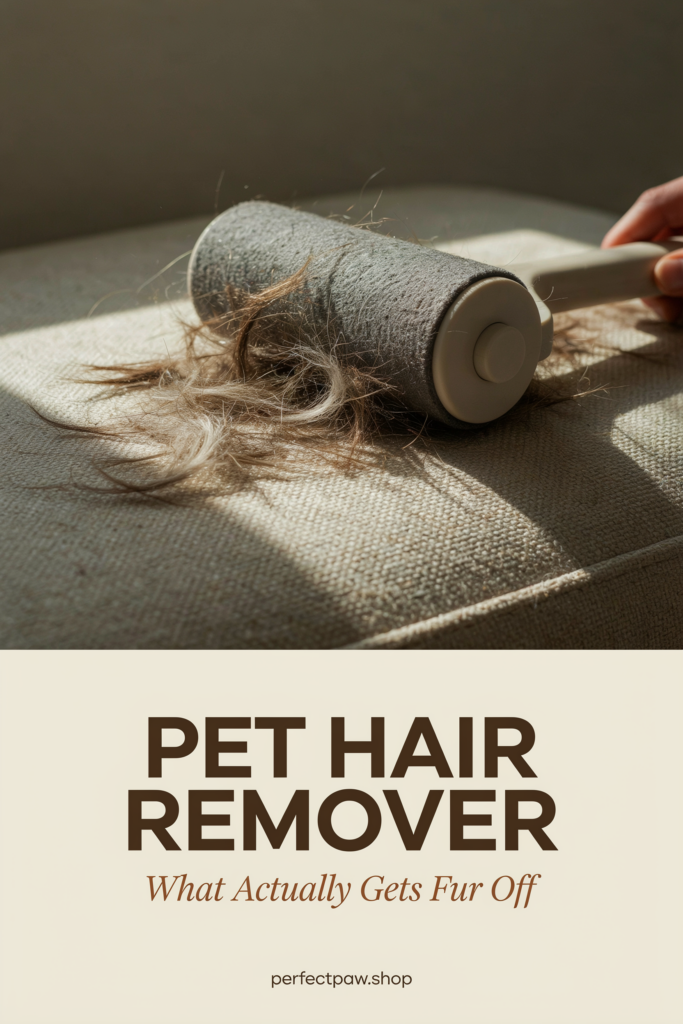
A pet hair remover is a second line of defence — the first is removing the hair before it leaves the animal. Once fur is woven into upholstery, adhesive rollers, rubber edges and washable pads each work on different surfaces, and using the wrong one on the wrong fabric is why most people conclude nothing works.
Adhesive lint rollers suit clothing, suits and smooth bedding. Rubber-edged tools and reusable pads work on carpet, rugs and woven upholstery, where hair is gripped by the weave and needs to be dragged out rather than lifted. Hard floors need a microfibre mop, not a roller — sweeping just launches the hair into the air.
On fabric with any texture, yes. Reusable rollers use a directional pile that pushes hair into an internal chamber, so they keep working after the point a sticky sheet has loaded up. Adhesive sheets still win on flat smooth cloth and on fine hair that a pile roller skates over.
Run the items on a 10-minute no-heat tumble dry first, then shake and wash. The dryer lint trap catches most of the loose hair before water turns it into a mat that redeposits on everything in the drum. Adding half a cup of white vinegar to the rinse relaxes fibres and releases more.
Partly. The allergen is mostly dander and saliva protein attached to hair and dust, so removing hair removes some of it. The EPA lists pet allergens among indoor biological pollutants and recommends you routinely vacuum carpets and fabric-covered furniture, dust hard surfaces with a damp cloth, damp-mop floors, and wash household linens. Damp is the key word — dry dusting redistributes.
Brush the animal more often and in one place. Ten minutes of deshedding on a mat removes more hair than an hour of cleaning after it has spread, and it is the only method that scales with shedding season. A grooming comb used three times a week does more than any device sold for furniture.
See the cat shedding guide and the dog grooming kit guide, or browse Grooming.
Give the animal one washable throw on the spot it already sleeps on, and wash that instead of the sofa. Tightly woven fabrics like leather and microfibre release hair; loose weaves, chenille and velvet trap it permanently. Choose the throw for weave, not looks.

Yes. Dampen a rubber glove and drag it across upholstery — static and friction pull hair into clumps you can lift off.
Slightly, by cutting static. Vinegar in the rinse does the same without coating the fabric.
Because it was airborne, not on the surface. Let dust settle for an hour after vacuuming, then damp-wipe.
Use adhesive sheets only, in the direction of the pile. Rubber and pile rollers damage the nap.
Empty the chamber after each use and rinse the pile occasionally. A loaded roller stops gripping.
A rubber-edged tool plus a seat cover. Car upholstery is woven tight enough that hair sits on the surface and drags off easily.

If you have any questions, here are some useful links:


Leave a comment