
Cat nail clippers come in three shapes and only one of them suits most owners. Cats have thin, curved, retractable claws — nothing like a dog’s — and the tool that works on a labrador will crush a cat’s nail instead of slicing it. Pick the wrong style and the cat learns to hide when the drawer opens.
Scissor-style clippers. They cut across the curve of the claw the way the nail naturally sits, need no loading step, and let you see the nail the whole time. Guillotine clippers were designed for round dog nails and pinch cat claws sideways. Human nail clippers split the claw and leave a ragged edge that snags on fabric.
On a pale claw the quick is the pink wedge at the base, and you cut 2–3mm beyond where it ends. On a dark claw you cannot see it, so you take thin slices off the tip and stop the moment the cut face shows a grey or dark dot in the centre — that dot is the quick approaching. Never cut past the point where the claw stops being translucent.
Every two to three weeks for indoor cats, less for cats that use a scratching post hard. Senior cats need it more often, not less — they scratch less, so the claws thicken and can grow round into the pad. Check the back feet too; owners skip them and that is where ingrown claws usually turn up.
Press styptic powder, cornstarch or plain flour onto the tip and hold firm pressure for 30 seconds. It bleeds more than it looks like it should. Stop the session, let the cat go, and try again in a few days — pushing on after a quick cut is what creates a cat that will not let you touch its paws for a year.
Do one claw at a time, not one paw. Catch the cat while it is sleepy, press the toe pad gently to extend the claw, clip, release, and walk away. The ASPCA’s cat grooming guidance covers paw handling as part of a full routine. Burrito-wrapping in a towel works for the last stubborn feet, but it is a fallback, not a starting method.
For some cats, yes. A grinder cannot cut the quick in one motion — it removes a little at a time, so there is a warning before you go too far. The trade-off is noise and vibration, which many cats refuse outright. Use a low-noise model and introduce it running, near the cat, before it ever touches a claw.

More in Grooming, and see the full cat coat and shedding guide for the rest of the routine.
No. Declawing removes the last bone of each toe, not the claw, and is associated with long-term pain and litter box avoidance. Trimming every two weeks plus a scratching post the cat actually likes solves furniture damage without surgery.
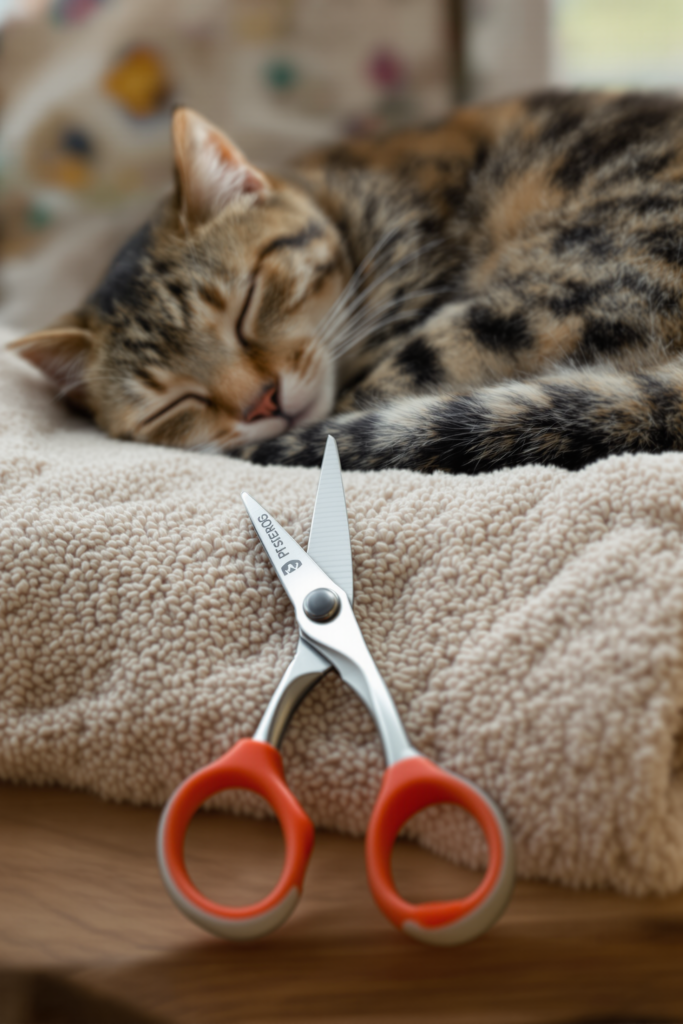
Take the sharp hook off and stop. You are blunting the tip, not shortening the claw to the base.
Not recommended. They compress the claw sideways and leave splits that catch on carpet and bedding.
From around eight weeks. Early handling is mostly about building tolerance — the amount of nail removed barely matters.
That is normal shedding of the outer claw sheath, usually after scratching. It is not a sign the nails need cutting more often.
Yes. Without hard outdoor surfaces the claws keep growing and can curl into the pad, especially on the thumb claw and the back feet.
Check them anyway. Back claws grow thicker and slower, and they are the ones most often found ingrown at a vet visit.

If you have any questions, here are some useful links:


Leave a comment